

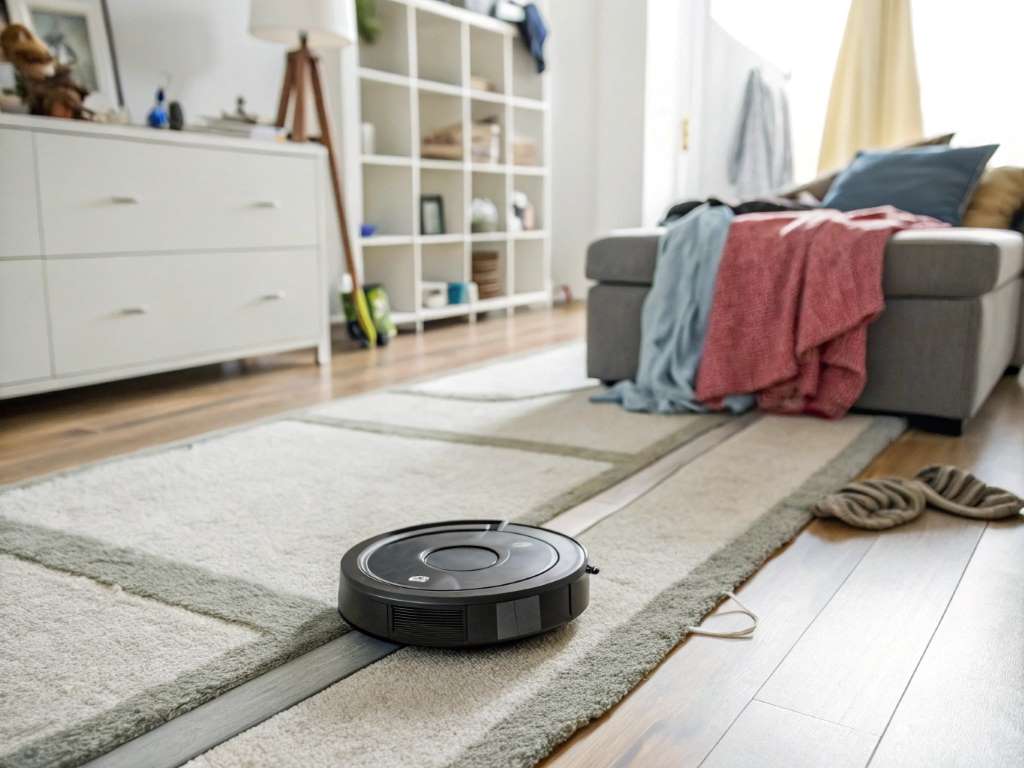
A robotic vacuum hums quietly as it glides across your floor. This small helper works diligently to collect dust and debris. Meanwhile, you might wonder about the hidden smarts behind its movements. How does this compact machine navigate around furniture? Moreover, how does it ensure thorough cleaning of every reachable area? The answer involves complex sensors, clever algorithms, and advanced mapping technologies. Together, these elements allow robotic vacuum cleaners plan efficient cleaning paths.
Early models simply bumped around rooms in random patterns. However, today’s vacuums employ much smarter approaches to clean your home. They understand their environment through various technologies. As a result, they execute methodical cleaning strategies with remarkable precision. Let’s explore the fascinating world of robotic vacuum path planning. We’ll discover how these devices clean our homes with impressive intelligence.
Weaving Through the Maze: Core Navigation and Mapping Strategies
The navigation system drives a robotic vacuum’s cleaning effectiveness. This system helps the robot see its surroundings and enables robotic vacuum cleaners plan their cleaning routes efficiently. Additionally, it creates digital maps and decides the next cleaning target. Several key technologies power this process, ranging from basic sensors to highly advanced mapping systems.
1. The Foundation: Sensors Galore
Modern robotic vacuums use many sensors as their eyes and ears. These sensors constantly send data to internal processors. Furthermore, they prove crucial for both mapping and real-time navigation decisions.
Infrared sensors emit light and detect reflections to identify obstacles. They also function as “cliff sensors” underneath the vacuum. If light doesn’t bounce back, the robot recognizes a drop-off. Consequently, it avoids falling down stairs. Bumper sensors detect physical collisions when the vacuum touches objects. When compressed, these sensors signal the robot to change direction. This helps navigation in tight spaces or around unexpected items.
Wheel-mounted optical encoders track the vacuum’s movement distance and direction. This information helps the robot understand its position. Some advanced models also include dust sensors. These detect areas with more dirt through sound or optical means. As a result, the vacuum spends extra time on particularly dirty spots. Discover How To Use A Shop Vac To Vacuum Water.
2. Creating the Blueprint: Mapping Technologies
Sensing obstacles alone doesn’t ensure efficient cleaning. Therefore, modern vacuums create detailed maps of your home. This allows systematic cleaning routes and thorough coverage. Two main technologies dominate this space.
LiDAR uses spinning lasers to emit light beams around the room. By measuring reflection time, the vacuum creates accurate 360-degree maps. LiDAR works well even in darkness. It enables precise mapping of complex layouts. This technology allows methodical cleaning patterns and efficient room navigation.
Camera-based systems use visual technology to “see” surroundings. They identify unique features like furniture edges and doorways. Then, advanced algorithms process this visual data immediately. While cameras may struggle in darkness, they constantly improve. Some models combine camera data with other sensors for better accuracy. Additionally, AI-powered recognition helps identify and avoid specific objects.
3. The Brains of the Operation: Path Planning Algorithms
With maps created and sensors providing live data, algorithms determine efficient cleaning paths. These aim to maximize coverage and minimize cleaning time. Furthermore, they avoid unnecessary recleaning of already-clean areas.
Basic models might still use random paths, moving until hitting obstacles. However, most modern robots follow pattern-based cleaning methods. These include parallel lines or spiral patterns for spot cleaning. This ensures more thorough coverage of all areas.
Edge cleaning traces the room’s perimeter first. Then, row-by-row patterns clean the main floor space. SLAM algorithms simultaneously build maps while tracking location. This continuous process helps adapt to environmental changes. If battery runs low, SLAM guides the robot back to its dock. After recharging, it resumes cleaning from the same spot.
AI-powered systems further refine path planning through machine learning. These robots learn efficient routes for your specific home layout. They identify persistent obstacles and recognize different floor types. Additionally, they can distinguish between various obstacle types. Some even avoid pet bowls while navigating closely around table legs.

4. Handling the Nuances: Obstacles, Floor Types, and Multi-Room Cleaning
Effective path planning involves more than covering open spaces. It also means handling real-home complexities with intelligence. When detecting obstacles, advanced robots clean as close as possible without getting stuck. AI-powered recognition helps make smarter decisions based on obstacle types.
Many vacuums can detect changes in floor surfaces. When moving from hardwood to carpet, sensors trigger increased suction power. Path planning continues systematically regardless of these adjustments. For homes with multiple rooms, robots with robust mapping clean entire floors. They navigate from room to room in logical sequences. Users can view these maps through companion apps.
The “recharge and resume” feature proves essential for larger homes. When batteries run low, path algorithms guide robots back to charging docks. Once recharged, they return to the exact spot where cleaning stopped. This ensures complete coverage without human intervention.
The robotic vacuum cleaners plan has evolved remarkably over time. From random wanderers to smart mappers using lasers and AI, these devices navigate homes with increasing skill. As technology advances, future vacuums will offer even more precise cleaning. They’ll truly remove the burden of floor care from our daily lives.
People Also Ask (FAQs)
Q1: How do robotic vacuums avoid falling down stairs?
They use “cliff sensors” on their undersides. These emit infrared light downward. When sensors detect drops, the vacuum changes direction immediately. This prevents falls and keeps the robot safe.
Q2: Can robotic vacuums clean multiple rooms effectively?
Yes, modern vacuums can clean several rooms automatically. They create detailed maps of entire floor plans. Many support room-by-room cleaning in logical order. Some even return to charge when needed, then resume cleaning afterward.
Q3: Do these robots learn your home’s layout over time?
Absolutely. Advanced models store detailed maps in memory. They refine these maps with each cleaning cycle. Some AI models adapt to furniture changes gradually. Many allow room labeling and no-go zones through smartphone apps.
Q4: What exactly is SLAM technology in robotic vacuums?
SLAM means “Simultaneous Localization and Mapping.” It builds maps while tracking position simultaneously. This enables systematic cleaning patterns and obstacle navigation. SLAM allows features like resuming cleaning after recharging sessions.
Q5: How do these vacuums handle obstacles like furniture?
They use sensors to detect and navigate around items. Advanced models with LiDAR see obstacles more precisely. The newest AI robots recognize specific object types. They might clean closely around furniture but avoid hazards completely.
Q6: Can robot vacuums work effectively in dark rooms?
LiDAR-based models work perfectly in darkness. Their lasers don’t need ambient light. However, camera-based systems may struggle without some light. Many newer models combine technologies for reliable performance in all conditions.
Conclusion
A robotic vacuum’s journey through your home follows careful planning. Sensors, mapping technologies, and smart algorithms guide its every move. These devices perceive, learn, and adapt to your unique living space.
These robots create detailed digital maps of your rooms. Then, they systematically clean every accessible area. They navigate obstacles with increasing intelligence. As technology evolves, we’ll see even smarter cleaning companions. They’ll further simplify our lives and save precious time. The quiet hum represents sophisticated robotic vacuum cleaners plan and automation working for you.


