
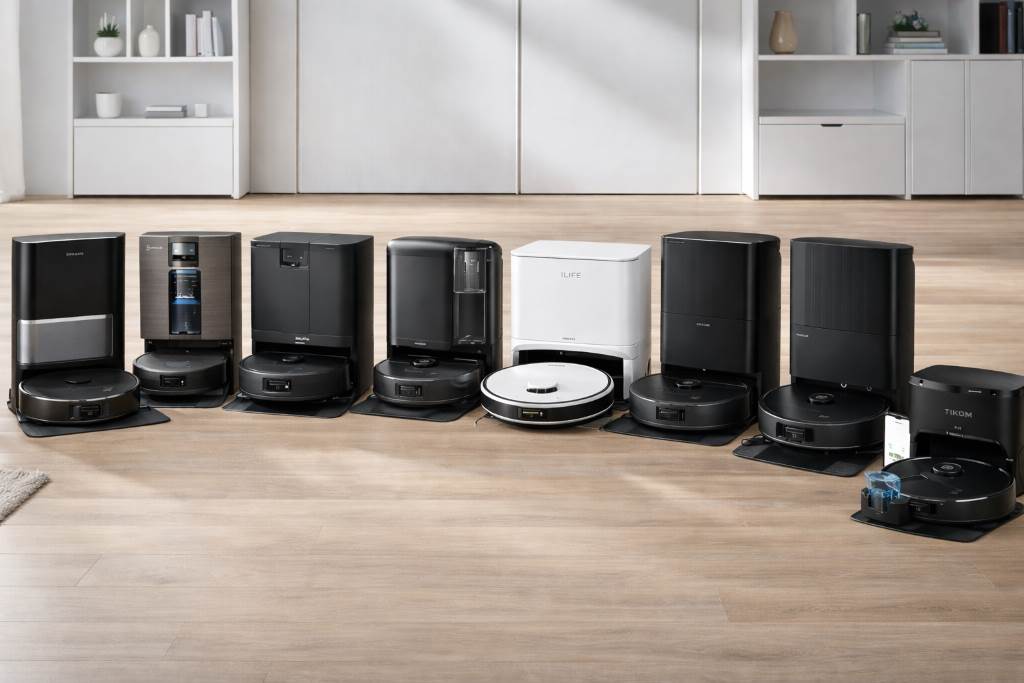
Robot vacuums once felt like a novelty. Today they handle a meaningful share of household cleaning. According to the International Federation of Robotics, domestic service robots now represent one of the fastest growing consumer technology segments worldwide. Another study from the United States Department of Energy notes that automated cleaning devices can reduce manual household cleaning time by up to 20 percent in average homes.
Modern robotic vacuum and mop systems go far beyond basic floor sweeping. They map rooms, avoid cables, lift mops when reaching carpet, and return to their docks to empty dust or wash mops. For busy households, pet owners, and anyone tired of daily floor maintenance, these machines provide a practical shift toward truly hands free cleaning.
This guide explores the most capable robotic vacuum cleaner and mop systems available in 2026, with real world considerations about usability, maintenance, and performance.
A Quick Overview of The Best Robotic Vacuum Cleaner and Mop
These robotic vacuum cleaners and mop models represent some of the most capable robotic cleaning systems currently available. Each one approaches automation slightly differently, which makes them suitable for different households and floor types.
- ECOVACS DEEBOT X11 OmniCyclone Robot Vacuum and Mop
- ECOVACS DEEBOT T80 OMNI Robot Vacuum and Mop
- Roborock QV 35A Robot Vacuum and Mop
- Tikom G8000 Robot Vacuum Cleaner
- Dreame Robot Vacuum and Mop with Extendable Mop
- Roborock Saros 10R Robot Vacuum and Mop
- ROPVACNIC Robot Vacuum Cleaner
- Tikom L8000 Plus Robot Vacuum and Mop
- Mova Robot Vacuum and Mop
- Eufy Robot Vacuum and Mop with Auto Lift Mop
- Eufy Robot Vacuum with Self Emptying Station
- ILIFE A30 Pro Robot Vacuum and Mop
- Eufy Robot Vacuum E25 with HydroJet System
Best Robotic Vacuum Cleaner and Mop of 2026
The following robotic vacuum cleaner and mop models cover a wide range of needs. Some focus on powerful suction and navigation while others prioritize automation and minimal maintenance. Real world usability varies depending on home size, floor materials, and how much hands on care a user wants to provide.
ECOVACS DEEBOT X11 OmniCyclone Robot Vacuum and Mop
Advanced self washing mop system
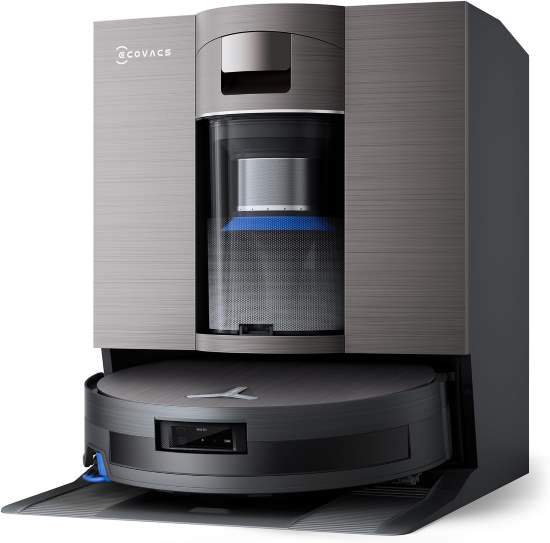
The DEEBOT X11 OmniCyclone feels like one of the most fully automated cleaning systems currently available. In everyday use, it handles large homes well because the docking station performs several maintenance steps automatically. It empties debris, washes the mop roller, and dries it between cycles.
The OZMO Roller 2.0 system noticeably improves mopping consistency compared with flat mop pads. Instead of dragging a damp cloth across the floor, the roller constantly refreshes itself. This reduces streaking on tile and sealed hardwood.
Navigation relies on AIVI 3D mapping. In practice it avoids common household clutter such as shoes, cables, and chair legs. The robot body remains moderately tall, so it may struggle under very low furniture.
Maintenance remains simple. The bagless station means owners clean a cyclone chamber occasionally instead of replacing disposable bags.
Homes with mixed flooring and active households tend to benefit most. Very small apartments may find the large dock excessive.
User Review: Daniel R.
“I run this robot daily in a house with two dogs. The roller mop actually scrubs instead of just wiping. I only empty the station every couple of weeks which feels surprisingly low effort.”
Key Features
• Roller mop cleaning system improves floor scrubbing because the rotating surface continuously refreshes itself with clean water
• High suction motor performance helps remove embedded debris from rugs without repeated cleaning passes
• Bagless cyclone station design reduces long term replacement costs and simplifies routine maintenance
• 3D obstacle recognition helps the robot avoid cables, shoes, and small objects that often trap simpler robots
• Automatic mop washing and drying prevents odors while keeping the mop ready for the next cleaning cycle
Pros and Cons
| Pros | Cons |
| Excellent automated maintenance | Large docking station footprint |
| Strong suction performance | Higher setup complexity |
| Effective roller mop cleaning | Tall for low furniture |
ECOVACS DEEBOT T80 OMNI Robot Vacuum and Mop
Balanced performance cleaner
The DEEBOT T80 OMNI aims for a balance between strong suction, smart navigation, and reliable mopping. In daily use it performs well across mixed flooring, particularly in homes where rugs and hard floors appear in the same room.
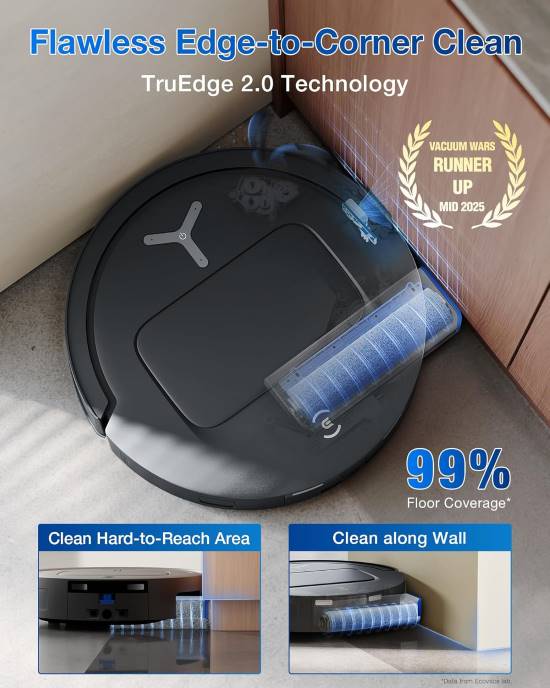
The TruEdge cleaning system helps the robot reach edges more effectively than earlier ECOVACS models. Corners remain difficult for most robots, but this design reduces the amount of manual touch up cleaning.
The OZMO roller mop again improves floor contact during mopping cycles. On sealed hardwood it leaves fewer water streaks compared with flat pads.
Owners should expect occasional brush cleaning if hair accumulation becomes noticeable. The ZeroTangle brush design reduces this issue but does not eliminate it entirely.
This model works well for medium sized homes where consistent daily cleaning matters more than extreme automation.
User Review: Angela P.
“I like that it transitions between vacuuming and mopping without constant intervention. It maps rooms quickly and rarely gets stuck around furniture.”
Key Features
• High suction cleaning performance removes dust and crumbs from carpets during routine daily cleaning
• TruEdge cleaning design improves edge coverage along walls and furniture bases
• Self cleaning roller mop refreshes the mop surface during cleaning to reduce streaking
• Smart AI navigation system builds room maps that improve route efficiency over time
• Hair resistant brush design reduces time spent untangling long hair or pet fur
Pros and Cons
| Pros | Cons |
| Reliable daily cleaning performance | Dock requires floor space |
| Good edge cleaning ability | Occasional brush maintenance |
| Accurate room mapping | Learning curve during setup |
Roborock QV 35A Robot Vacuum and Mop
Reliable obstacle avoiding cleaner
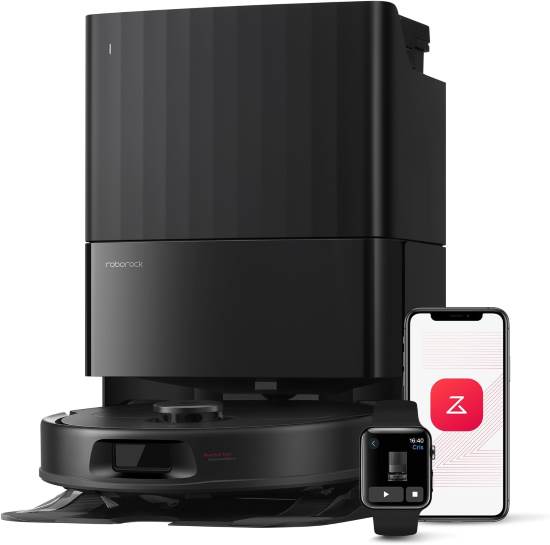
Roborock continues to focus on navigation accuracy and efficient route planning. The QV 35A demonstrates this clearly during everyday use. It navigates furniture clusters and cables with impressive precision.
The anti tangle brush design helps pet owners reduce maintenance time. Long hair tends to accumulate less aggressively compared with older brush types.
Mopping performance works best for light maintenance cleaning rather than heavy floor scrubbing. The system keeps hard floors fresh but does not replace deeper manual mopping sessions.
Because the robot body remains relatively slim, it moves under many couches and beds where larger robots cannot reach.
For households with pets or cluttered rooms, the strong obstacle detection makes daily operation more reliable.
User Review: Marcus L.
“My previous robot constantly tangled in cables. This one rarely does. It moves methodically through rooms and rarely repeats the same spot.”
Key Features
• Precision obstacle detection sensors help the robot avoid cables, toys, and furniture legs
• Hair resistant brush system reduces maintenance time for pet owners
• Consistent suction performance handles dust and debris from both rugs and hard flooring
• Compact body design reaches lower furniture spaces where dust tends to accumulate
• Efficient room mapping improves cleaning coverage during repeated runs
Pros and Cons
| Pros | Cons |
| Excellent obstacle avoidance | Mop suited for light cleaning |
| Slim body for furniture | Dock lacks advanced automation |
| Strong navigation reliability | Moderate suction compared premium |
Tikom G8000 Robot Vacuum Cleaner
Simple budget friendly cleaner
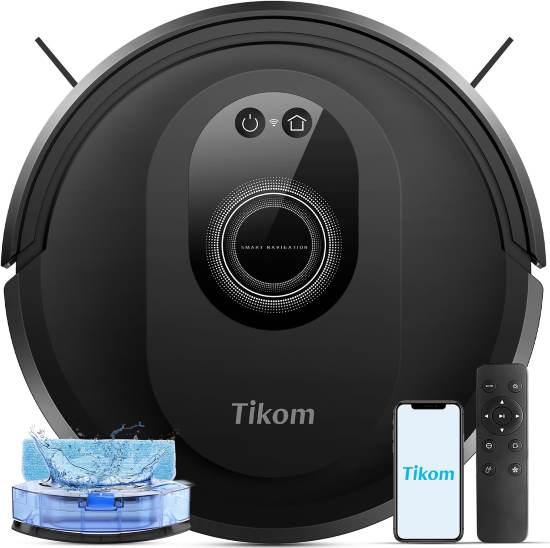
The Tikom G8000 takes a more straightforward approach. It focuses on strong suction and basic automation rather than advanced mapping or docking systems.
In small apartments or single level homes it performs surprisingly well. The robot follows logical cleaning paths and returns to its charging dock when needed.
The suction system handles everyday debris effectively. Crumbs, dust, and pet hair disappear quickly from hard floors and low pile carpets.
Because it lacks complex navigation sensors, it occasionally bumps furniture before adjusting direction. This does not cause damage but reminds users that the robot belongs to a simpler design category.
Maintenance remains straightforward. Owners empty the dustbin manually after several cleaning sessions.
For first time robot vacuum buyers, the G8000 offers an accessible starting point.
User Review: Carla M.
“I wanted something simple for my apartment. It runs every morning and keeps the floors tidy without much effort.”
Key Features
• Strong suction cleaning motor removes daily debris from hard flooring and low carpets
• Automatic self charging behavior allows the robot to return to its dock when battery levels drop
• Compact lightweight body fits easily under beds and smaller furniture
• Simple control interface makes it easy for first time users to schedule cleaning cycles
• Affordable maintenance design avoids complex replacement components
Pros and Cons
| Pros | Cons |
| Simple reliable daily cleaning | Basic navigation system |
| Lightweight compact robot | No advanced mapping |
| Easy setup process | Manual dustbin emptying |
Dreame Robot Vacuum and Mop with Extendable Mop
Adaptive edge mopping cleaner
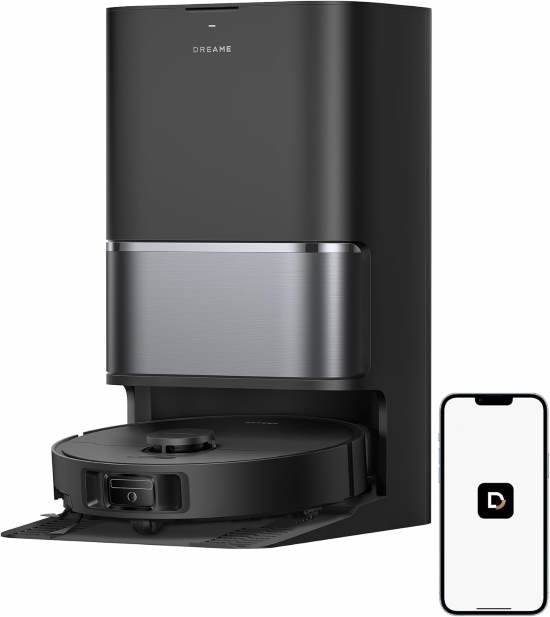
The Dreame model introduces an extendable mop arm that reaches along edges where traditional robots often miss spots. In kitchens and bathrooms this feature noticeably improves mopping coverage.
Vacuum performance remains strong across both carpets and hard floors. The suction system captures fine dust effectively which helps reduce buildup along baseboards.
The self emptying dock simplifies ownership because users do not interact with the dustbin after every cleaning cycle.
In daily use the navigation system behaves predictably. It maps rooms accurately and avoids common obstacles such as chair legs and pet bowls.
However the extendable mop mechanism occasionally requires cleaning if debris accumulates near the arm hinge.
Homes with large tiled areas benefit most from this design.
User Review: Patrick S.
“The extending mop arm actually cleans along the kitchen cabinets. My old robot always left a dirty strip along the wall.”
Key Features
• Extendable mop arm design reaches wall edges where standard mop pads cannot reach
• Strong suction vacuum motor removes dust and debris from carpets and hard flooring
• Automatic self emptying dock reduces daily maintenance tasks for owners
• Smart room mapping system helps the robot navigate efficiently around furniture
• Dual cleaning capability allows vacuuming and mopping within the same cleaning cycle
Pros and Cons
| Pros | Cons |
| Excellent edge mopping reach | Mop arm needs occasional cleaning |
| Strong suction cleaning | Dock requires storage space |
| Accurate mapping system | Slightly complex maintenance |
Roborock Saros 10R Robot Vacuum and Mop
High end navigation focused cleaner
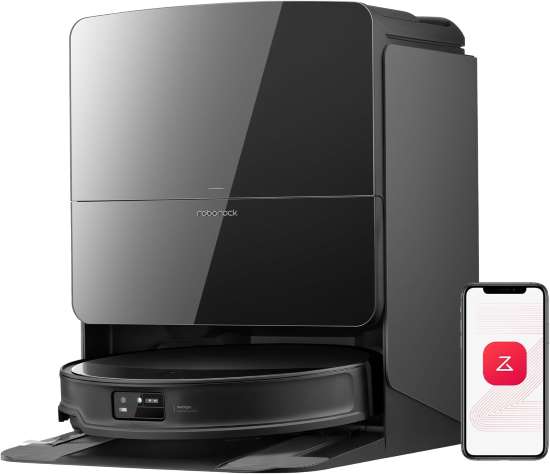
The Saros 10R represents Roborock’s push toward extremely reliable navigation. During real world use it moves confidently through cluttered rooms without repeated collisions.
The zero tangle brush design significantly reduces hair accumulation. Pet owners especially notice the reduced maintenance time.
Its self emptying dock keeps daily operation simple. The robot completes multiple cleaning sessions before the station requires attention.
Mopping works best as a maintenance feature rather than deep floor scrubbing. It keeps surfaces fresh but does not replace periodic manual cleaning.
Because of its navigation precision, the Saros 10R suits homes with complex furniture layouts or narrow hallways.
User Review: Steven H.
“The navigation feels extremely refined. It moves smoothly through our dining chairs without getting stuck.”
Key Features
• Advanced obstacle detection system allows smooth movement through complex furniture layouts
• Zero tangle brush design reduces maintenance for homes with pets or long hair
• Self emptying dock station limits direct user interaction with collected debris
• Efficient room mapping technology improves cleaning routes over repeated runs
• Balanced vacuum and mop performance supports routine floor maintenance
Pros and Cons
| Pros | Cons |
| Highly reliable navigation | Mop not deep scrubbing |
| Low hair tangling risk | Larger dock footprint |
| Consistent cleaning coverage | Premium complexity |
ROPVACNIC Robot Vacuum Cleaner
Customizable cleaning adjustments
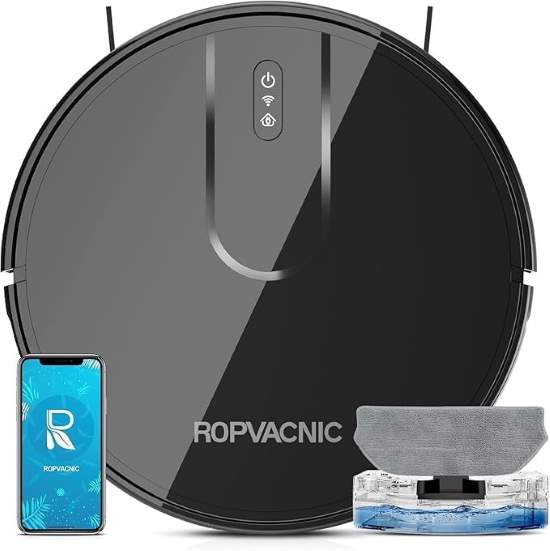
ROPVACNIC focuses on flexible cleaning settings that allow owners to customize suction levels and cleaning routes.
In everyday use the robot performs best in medium sized homes where rooms remain relatively open. Obstacle detection helps it navigate furniture without frequent collisions.
The adjustable cleaning modes allow users to prioritize quiet operation or stronger suction depending on the situation.
However the robot lacks advanced docking automation. Owners still empty the dustbin manually after several runs.
For users who want adjustable cleaning behavior without complicated docking systems, this model provides a balanced middle ground.
User Review: Laura G.
“I like the ability to adjust suction levels depending on the room. It runs quietly in the evening without disturbing us.”
Key Features
• Adjustable suction settings allow users to balance cleaning power and noise levels
• Obstacle detection sensors help the robot navigate furniture without frequent collisions
• Automatic self charging behavior ensures the robot returns to its dock when needed
• Flexible cleaning schedules support daily or weekly automation routines
• Compact design profile helps reach tight spaces around furniture
Pros and Cons
| Pros | Cons |
| Flexible cleaning settings | Manual dustbin maintenance |
| Quiet operation modes | Limited advanced automation |
| Good basic navigation | Moderate suction power |
Tikom L8000 Plus Robot Vacuum and Mop
Self emptying convenience model
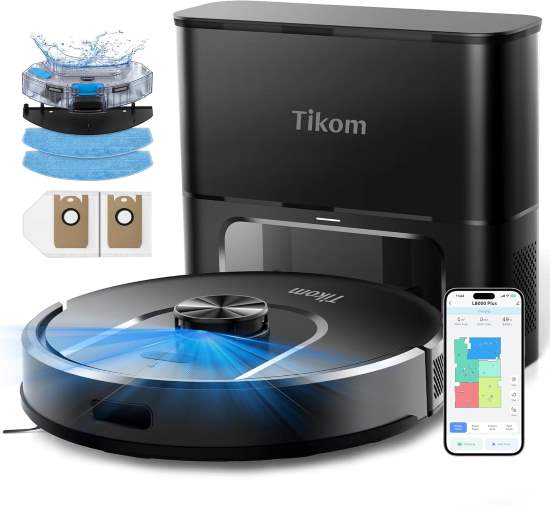
The Tikom L8000 Plus improves on the company’s simpler models by introducing a self emptying station and smarter navigation.
In daily operation the robot covers rooms methodically and returns to its dock to empty collected debris. This reduces how often owners interact with the machine.
Mopping performance remains light maintenance oriented. It handles spills and light dust but does not replace periodic deep cleaning.
The mapping system divides rooms clearly which allows targeted cleaning through the companion app.
This model suits households that want automated dust disposal without paying for extremely advanced robotics.
User Review: Kevin B.
“The self emptying dock saves time. I rarely touch the robot except to refill water.”
Key Features
• Self emptying dock station reduces manual interaction with collected debris
• Smart navigation mapping helps divide rooms for targeted cleaning tasks
• Combined vacuum and mop system supports daily floor maintenance
• Strong suction cleaning performance removes dust and crumbs effectively
• Scheduled cleaning automation allows the robot to operate while owners are away
Pros and Cons
| Pros | Cons |
| Convenient self emptying dock | Mop suited light cleaning |
| Clear room mapping system | Larger station footprint |
| Reliable suction cleaning | Basic obstacle detection |
Mova Robot Vacuum and Mop
Protective automated cleaning system
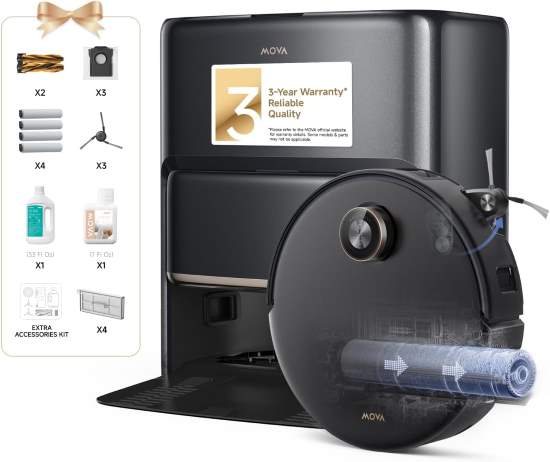
The Mova robot emphasizes system protection and durability. The AutoShield protection concept monitors internal components to prevent overheating or mechanical stress.
In daily cleaning sessions the robot performs well across hard floors and low carpets. The extendable mop system improves edge coverage in kitchens and hallways.
Navigation accuracy remains good though slightly slower than premium competitors. The robot prefers cautious movements when approaching obstacles.
Maintenance remains manageable. The docking station handles dust disposal while users occasionally clean sensors and brushes.
Households concerned about long term reliability may appreciate the extra protective monitoring built into the system.
User Review: Jason T.
“It moves a little slower than my old robot but seems very careful around furniture. The edge mopping works nicely along baseboards.”
Key Features
• AutoShield system monitoring protects internal components from mechanical strain
• Extendable mop cleaning system improves coverage along wall edges
• Reliable suction vacuum performance removes dust from everyday surfaces
• Self emptying docking station reduces daily maintenance tasks
• Careful navigation movement lowers the risk of collisions with furniture
Pros and Cons
| Pros | Cons |
| Protective system monitoring | Slightly slower navigation |
| Good edge mopping | Larger docking station |
| Reliable daily cleaning | Learning curve setup |
Eufy Robot Vacuum and Mop with Auto Lift Mop
Smart carpet detecting cleaner
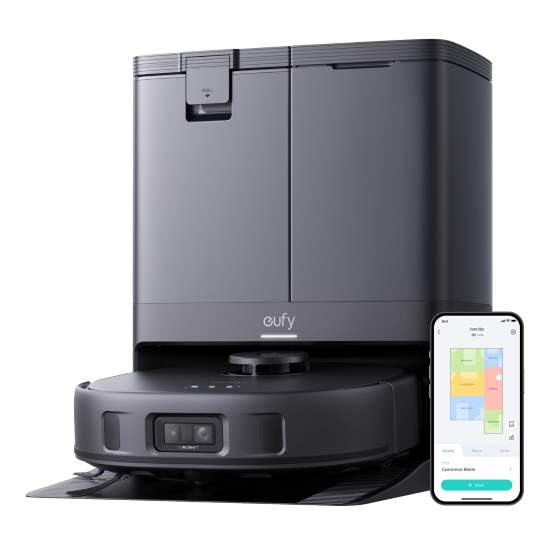
Eufy designed this model to handle mixed flooring environments particularly well. The auto lift mop system raises the mop automatically when the robot detects carpet.
This prevents damp mops from dragging across rugs which remains a common problem with simpler robot mops.
In daily use the robot transitions smoothly between hardwood floors and carpets without user intervention. The self emptying and self refilling station further reduces maintenance tasks.
Navigation remains accurate enough for most homes though extremely cluttered spaces may slow the robot slightly.
For homes with multiple flooring types this design solves one of the most common robot cleaning frustrations.
User Review: Emily D.
“I love that the mop lifts when it reaches the rug in our living room. My old robot always soaked the carpet edges.”
Key Features
• Automatic mop lifting system protects carpets during mixed floor cleaning
• Self emptying and water refilling dock reduces routine maintenance tasks
• Carpet detection technology ensures proper cleaning mode selection
• Strong suction cleaning performance removes debris from rugs and hard flooring
• Smart navigation mapping system improves route efficiency during daily runs
Pros and Cons
| Pros | Cons |
| Excellent carpet protection | Slightly slower mapping |
| Automated maintenance dock | Large docking base |
| Reliable mixed floor cleaning | Premium system complexity |
Eufy Robot Vacuum with Self Emptying Station
Ultra slim low furniture cleaner
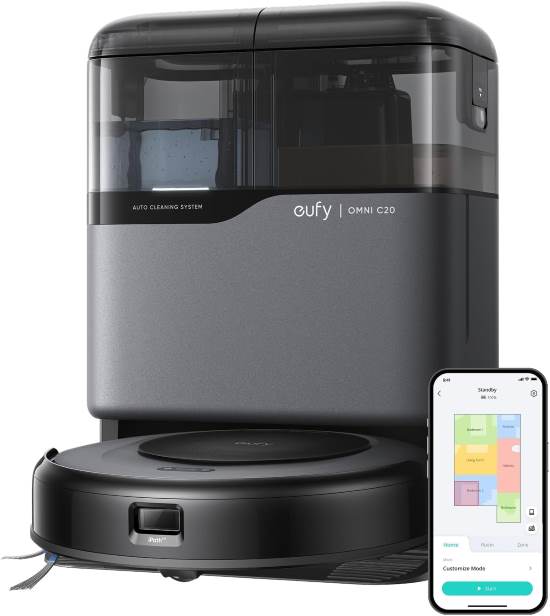
This eufy robot focuses on reaching places many other robots cannot. Its ultra slim body allows it to glide beneath low couches and cabinets.
In smaller homes or apartments this design proves especially useful. Dust often accumulates under furniture where upright vacuums rarely reach.
The self emptying station reduces how often users interact with the dustbin. Navigation remains straightforward and effective for typical room layouts.
Because of the slim design the suction motor remains slightly smaller than high end models. It handles dust and crumbs well but struggles with thick carpets.
Homes dominated by hard flooring benefit most from this robot.
User Review: Nina K.
“It reaches under our sofa where nothing else fits. That area used to collect dust constantly.”
Key Features
• Ultra slim body design reaches low furniture areas where dust collects
• Self emptying dock system reduces daily maintenance requirements
• Efficient cleaning navigation covers rooms methodically without excessive overlap
• Quiet motor operation allows cleaning during nighttime schedules
• Compact size mobility improves movement through tight spaces
Pros and Cons
| Pros | Cons |
| Extremely slim robot design | Moderate suction power |
| Quiet daily operation | Not ideal thick carpets |
| Convenient self emptying dock | Basic obstacle detection |
ILIFE A30 Pro Robot Vacuum and Mop
LiDAR guided navigation cleaner
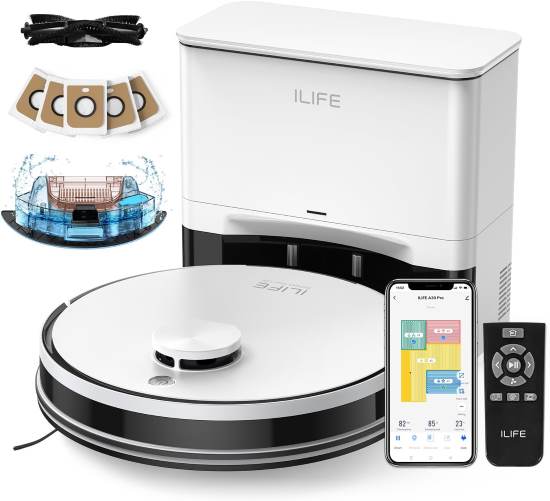
The ILIFE A30 Pro relies on LiDAR navigation to map rooms with surprising accuracy. During initial setup it scans the entire floor plan and builds a digital layout.
This helps the robot clean efficiently without random movement patterns. It moves room by room instead of wandering across the floor.
The self emptying station reduces dustbin maintenance which makes it suitable for homes with pets or frequent cleaning schedules.
Mopping performance remains light maintenance oriented. It keeps floors tidy but does not replace deeper manual mopping.
Users who value predictable cleaning routes and reliable mapping often appreciate LiDAR based robots like this one.
User Review: Victor C.
“The mapping impressed me immediately. It divided my apartment into rooms within minutes.”
Key Features
• LiDAR mapping navigation system creates accurate digital maps for efficient cleaning routes
• Self emptying dust station reduces the frequency of manual maintenance
• Strong daily suction cleaning removes dust and crumbs from common surfaces
• Room based cleaning control allows targeted cleaning through the mobile app
• Combined vacuum and mop function supports routine floor upkeep
Pros and Cons
| Pros | Cons |
| Accurate LiDAR mapping | Mop suited light cleaning |
| Efficient room cleaning routes | Dock needs floor space |
| Reliable daily performance | Moderate suction level |
Eufy Robot Vacuum E25 with HydroJet System
High suction deep cleaning model
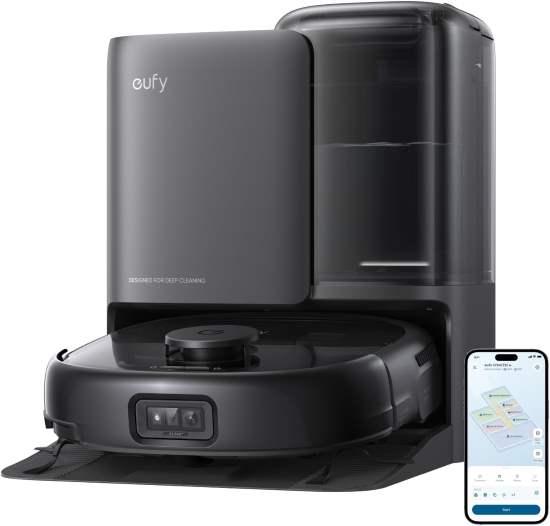
The eufy E25 focuses on suction strength combined with an advanced HydroJet mopping system. This combination aims to improve deep cleaning results.
During everyday use the robot performs well on carpets because the suction motor captures embedded debris more effectively than many mid range models.
The HydroJet system helps maintain mop moisture and pressure across the floor surface which reduces streaking.
Obstacle avoidance works reliably thanks to AI based recognition. The robot navigates around common household items without frequent intervention.
However the stronger suction motor produces slightly more noise compared with ultra quiet models.
For homes with pets or high foot traffic, the E25 offers stronger cleaning performance than most standard robot vacuums.
User Review: Robert M.
“We have two dogs and a lot of carpet. This robot finally keeps up with the hair buildup.”
Key Features
• High suction cleaning power removes embedded dirt from carpets and rugs
• HydroJet mopping system maintains consistent moisture during floor cleaning
• AI obstacle avoidance technology reduces the risk of getting stuck around household clutter
• Hair resistant brush design simplifies maintenance for pet owners
• Smart navigation mapping improves cleaning efficiency across large homes
Pros and Cons
| Pros | Cons |
| Very strong suction power | Slightly louder motor |
| Effective carpet cleaning | Dock requires space |
| Reliable obstacle detection | Higher power consumption |
Buying Guide
Choosing a robotic vacuum cleaner and mop involves more than comparing suction numbers or app features. Long term satisfaction depends on how well the robot fits your home layout, cleaning habits, and willingness to maintain the system.
What Actually Matters Before Choosing
Core performance factors
Cleaning performance depends on suction strength, brush design, and navigation intelligence working together. Many buyers focus only on suction numbers, but navigation efficiency often matters more. A robot with moderate suction that cleans every corner consistently often performs better than a powerful robot that misses half the room.
Navigation also affects battery efficiency. Robots that map rooms accurately finish faster and avoid repeating the same areas.
Material quality and durability
Robotic vacuums operate frequently, sometimes every day. Motors, brush housings, and wheels experience constant stress. Cheaper models often use thinner plastic components that wear faster.
Higher quality robots tend to include reinforced wheel assemblies and more durable brush mounts. These details rarely appear in marketing descriptions but affect long term reliability.
Usability and everyday interaction
Some robots demand frequent manual intervention. Others automate most maintenance tasks.
Self emptying stations reduce daily work, but they require additional floor space. For small apartments, simpler robots without large docks may actually feel more convenient.
App usability also matters. If scheduling or mapping controls feel confusing, many owners stop using advanced features entirely.
Maintenance requirements
Every robotic cleaner requires some level of care. Brushes collect hair, sensors gather dust, and mop pads need washing.
Systems with automatic mop washing or hair resistant brushes reduce routine work significantly. However, these features add mechanical complexity which sometimes increases long term servicing needs.
Understanding the maintenance routine before purchasing prevents frustration later.
Environmental compatibility
Floor type strongly affects robot performance. Homes with mostly tile or hardwood benefit more from mopping systems. Thick carpets require stronger suction motors and brush agitation.
Furniture height also matters. Some robots cannot reach under low couches or cabinets.
Mapping your home layout before choosing a robot often leads to better results.
Safety considerations
Modern robots include cliff sensors that prevent falling down stairs. However, small obstacles still create problems.
Homes with many cables, toys, or pet bowls benefit from robots with advanced obstacle detection. Simpler models may require more pre cleaning preparation.
Common Buyer Mistakes
Many buyers assume higher suction automatically equals better cleaning. In reality, navigation coverage matters just as much. A robot that misses corners or repeatedly cleans the same spot wastes its power.
Another common mistake involves ignoring docking station size. Self emptying docks can occupy as much floor space as a small trash bin. In tight apartments this becomes inconvenient.
Some buyers also expect robot mops to replace manual deep cleaning. Most robotic mopping systems maintain cleanliness rather than removing heavy stains.
Another misunderstanding involves maintenance expectations. Marketing often emphasizes automation, but brushes and sensors still require periodic cleaning.
Some users also underestimate obstacle management. Homes with loose cables or pet toys benefit significantly from advanced object recognition.
Finally, many buyers overlook software support. Robots rely on apps for mapping and scheduling. Poor software updates can limit long term usability.
Related:
Why Your Roomba Isn’t Docking Properly: A Troubleshooting Tale
Does Robot Vacuum Work on Carpet? The Truth You Need to Know!
How to Match Products to Specific Needs
Casual users
People who want simple daily cleaning often prefer straightforward robots with reliable suction and minimal setup. Simpler models work well in smaller homes with predictable layouts.
Heavy daily users
Large households with pets or children produce more debris. These homes benefit from robots with strong suction, self emptying docks, and durable brush systems.
Small spaces or apartments
Compact robots with slim profiles perform best in smaller living areas. Large docking stations can feel intrusive in limited spaces.
Longevity focused buyers
Some users prioritize durability over cutting edge features. Robots with simpler mechanical systems and fewer moving components often last longer with proper maintenance.
Advanced automation users
Tech oriented households may appreciate robots with mapping customization, obstacle recognition, and automatic mop washing. These systems reduce manual involvement but require more setup and occasional troubleshooting.
Conclusion
Robotic vacuum cleaner and mop systems continue to evolve rapidly. Navigation accuracy, automatic maintenance stations, and improved mopping designs now allow many homes to maintain cleaner floors with far less daily effort.
However the best robot depends heavily on the environment it operates in. Large homes benefit from powerful mapping systems and automated docks. Smaller spaces often work well with simpler compact robots.
Understanding your floor types, furniture layout, and maintenance tolerance helps narrow the field quickly. When matched correctly to the home environment, robotic cleaning systems can quietly handle one of the most repetitive household tasks.
FAQs
Do robot vacuums replace traditional vacuums completely?
No, most robotic vacuums maintain daily cleanliness but occasional deep manual cleaning remains helpful.
Can robot vacuums clean thick carpets?
Some high suction models can handle thicker carpets, but performance varies depending on brush design and motor strength.
How often should robot vacuum brushes be cleaned?
Most households should check and clean brushes every one to two weeks.
Do robot mops work on hardwood floors?
Yes, most systems clean sealed hardwood safely when used with appropriate water settings.
Are self emptying stations necessary?
They are not required but significantly reduce the frequency of manual dustbin emptying.


