Many of us know that a shop vac is a versatile and powerful cleaning tool for a variety of messes, including liquids. If you used to get into trouble with water cleaning, maybe a shop vac can help you out.
Neither you’ve never use a shop vac before nor you may not have gotten what the term “shop vac” actually is, then we will let you get right to it.
So, here’s everything you need to know about a shop vac and how to vacuum water with a shop vac to its fullest potential.


What is a Shop Vac?
A shop vac is a brand of shop vacuum most used in woodworking and construction. It can deal with a variety of heavy-duty messes that normal vacuums cannot such as glasses, water, etc.
A shop vac consists of a high-powered motor and suction units, which are used to get the areas free from debris, dust, and chunks of material from woodworking shops and building sites. Each shop vac features a big hose and a big canister for holding purposes. Those make a shop vac become an amazing tool for every cleaning space. Underneath the vac, there are some wheels used for navigating around the whole spaces.
In some ways, a shop vac simply looks like a big bucket with a hose coming out of it, people also call it “a bucket vacuum” for this reason. Simply put, a shop vac is intended for heavy-duty tasks, but who said it is not an incredible machine for generally home-cleaning purposes?
At first, a shop vac is designed to suck up screws, nails, or other small metal pieces, wood chunks, sawdust or any other small debris in construction sites or woodworking shops. That’s why people have called it “Shop Vac”.
However, till now, people can use them not only for what it is built for but they also do some home vacuuming with this. Some more expensive shop vacs have extra features – vacuuming water and wet messes. These versatile shop vacs are called wet-dry shop vacs.
How to vacuum water with a shop vac?
If someone asks me which the most useful vacuum in the house, my answer must be a wet-dry shop vac. A wet-dry shop vac can suck up anything from spilled juice to scattered glasses and anywhere from the house, garage to the workshop. Now if you have any problem with a clogged toilet, a broken pipe or minor flooding resulted from the heavy rain yesterday, you should consider a wet-dry shop vac before letting water damages your house.
But, vacuuming water or any wet objects is very different from vacuuming other dry objects. The cleaning progress is not so difficult, just be careful! Below I have a step-by-step instruction for sucking up water that can make your task less struggling. Here we go!
Step 1:
First thing first, you should never forget any preparation steps before sucking up water.
You need to empty the collection tank first in case you still contain any old waste inside. Some models separate a dry dust bag and a wet tank, but others use one for both. If the dry vacuum bag is applicable, then take it out.
Step 2:
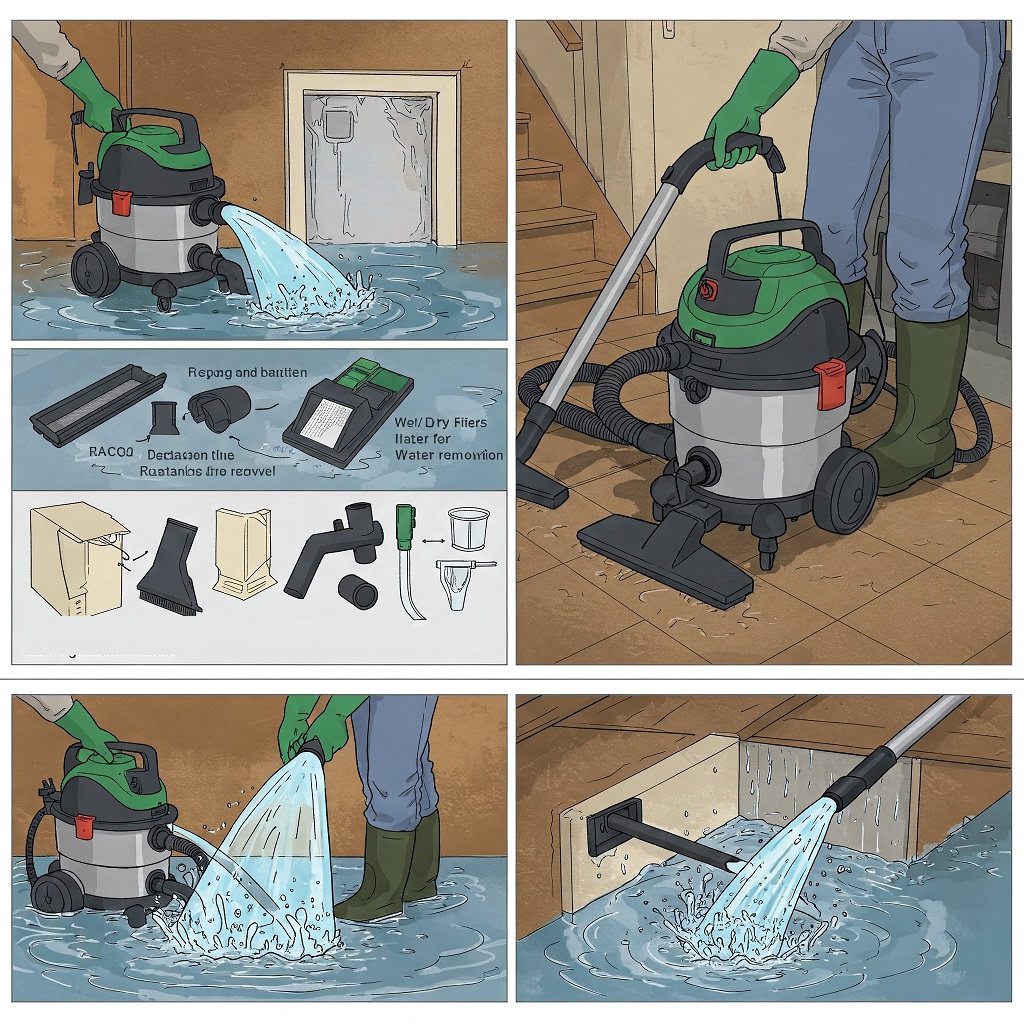
In this step, you need to remove the paper filters in your vacuum because it can let the water flow into the tank. If you can’t remove it, try loosening the cartridge filter by turning counter-clockwise and pull it out.
Some models allow you to remove the standard paper filter but have a foam sleeve in place that can stay on, but others do not. So, you have to read the instructions, booklet or even on the filter itself to make sure whether you can use the filter for water pickup or not.
However, if the filter is used, you should always rinse it and allow it to dry after each vacuum to avoid mildew.
Step 3:
Attach one end of the plastic liquid pickup tube to the collection tank, then attach another to the lid cage. And, you need to push that tube into the tank and put the cover back on.
Step 4:
Now you should insert the water pickup elbow (It is a squeegee apparatus that is bent in the middle) into the pickup tube. Then attach the other end to the vacuum hose by pushing the hose securely until it sticks to the elbow.
Step 5:
It is high time to begin suction. Turn the wet-dry vac power switch on and start to vacuum up the water.
One thing you should remember as you work: pay close attention to the sound of the vacuum motor – you hear a marked increase in pitch, which means the vacuum has stopped the air-flow automatically. When the tank is full, a floating ball mechanism in some models can stop the suction immediately.
Then the machine will warn you by creating this high-pitched sound. In this circumstance, you must stop the vacuuming progress, turn off the power immediately once hearing this sound.
Step 6:
After finishing the cleaning progress, you need to unplug the vacuum. Then empty the water in the tank by removing the head assembly, or you can remove the drain plug on the bottom instead.
Step 7:
Last but not least, cleaning your vacuum after cleaning your home. You should use warm water to wash the inside of the tank carefully, use a soft brush to gently wash it with a bar of mild dish soap.
After that, use a dry soft cloth to wipe the tank one more time and let it completely dry before re-inserting into the vacuum.
For the large body of water…….
Well, as if you have to deal with a flood of water in your home or any other large body of water, so what?
Yes, it can. But I would recommend not using the shop vac for a large amount of water. Because the vacuum can be filled up too fast and damaged or clogged with any unbelievable random objects in the house. Imagine that you have to empty the tank every 1 minute to suck up such a huge amount, it’s not worth it, please trust me because I’ve tried so.
Fortunately, nothing is impossible, I have another solution for this situation – an output hose. The output hose allows the water to flow right back out after sucking up into other areas you want. However, you should keep in mind that the output hose sometimes cannot keep up with the water income, just wait every few seconds and continue your work. Everything’ll be OK!
Conclusion
The last words are that a shop vac is certainly a very wonderful tool. Although it is not the best choice for every situation like general home floor cleaning, it can work at the peak performance if the circumstances call for it.
So, do you want to own a shop vac?
If you find any question on this matter, leave us a message or post a question. Please let us know if this article was of help to you, and pass it along if you know someone in need of a water-problem solution. Thank you for your reading.