The dream of automated cleaning has taken root in homes around the world, and by 2025, robot vacuum cleaners have become more of a necessity than a novelty. With a dizzying array of models and features, choosing the right one can feel like finding a needle in a haystack. Yet, as with any good investment, selecting the right robot vacuum cleaner hinges on understanding your home’s unique cleaning needs, your lifestyle, and the capabilities of the technology. Today’s robotic vacuums do much more than sweep dust—they map rooms, dodge obstacles, mop floors, and even empty themselves. But how do you know which features you truly need?
Let’s simplify this. Let’s empower your decision-making. And let’s ensure you get the most efficient cleaning assistant for your hard-earned money.
Understanding the Fundamentals of Cleaning Performance
Your robot vacuum’s primary job is to clean, right? So, it makes sense that suction power, brush design, and navigation efficiency should top your list. Suction power, often measured in Pascals (Pa), gives an idea of how strongly the vacuum can pull in dust, debris, and pet hair. In 2025, top-tier models boast over 10,000 Pa. But even a high Pa rating won’t save a vacuum with poorly designed brushes or clunky navigation.
Look for models with tangle-free brush rolls if you own pets, and pay attention to how the robot navigates your home. LiDAR and AI-powered obstacle detection aren’t just techy jargon—they determine whether your robot skips entire sections or gets stuck on every sock in its path.
Convenience Is King: Maintenance and Automation Features
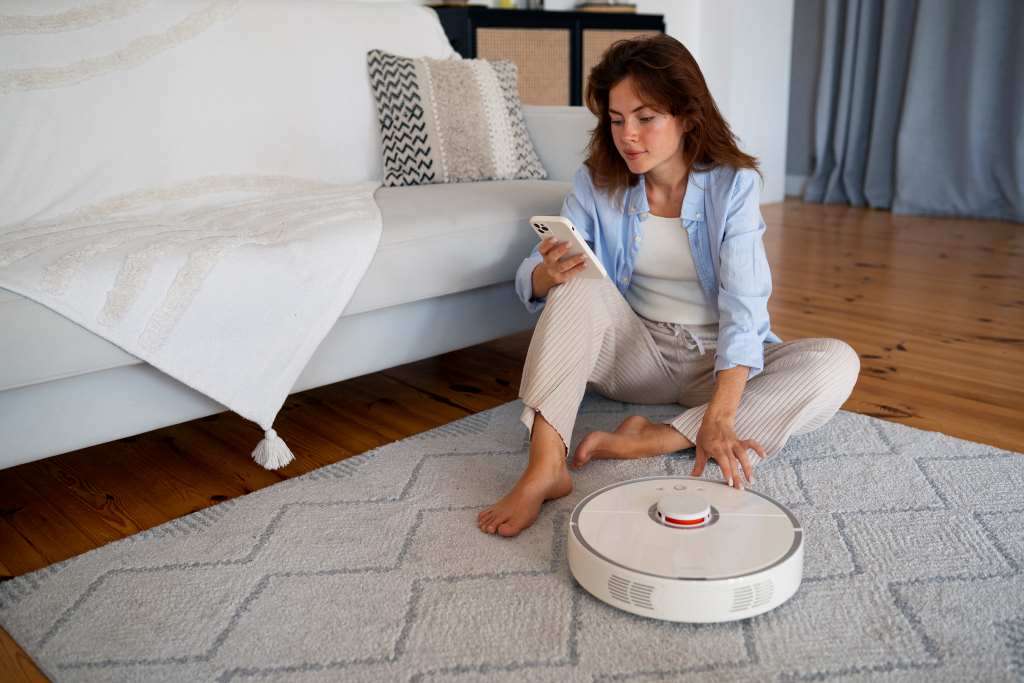
People buy right robot vacuum cleaner to make life easier. So it’s ironic when maintenance becomes the biggest hassle. That’s why convenience features matter.
Self-emptying docks are game-changers. Instead of emptying a tiny bin every day, your robot empties itself into a larger container that might only need attention once every few weeks. Add in washable filters, easily removable brushes, and “recharge and resume” functions, and suddenly, your daily cleaning chore truly becomes automated.
Smart Mapping and Obstacle Avoidance: Navigating with Intelligence
Bump-and-go models are a thing of the past. The best robot vacuums now use LiDAR or VSLAM to map your entire house. Why does this matter? Because a mapped house means efficient, room-by-room cleaning, virtual no-go zones, and the ability to schedule cleanings by area.
AI-driven obstacle avoidance is a lifesaver—literally. It prevents pet waste disasters and recognizes small items like socks or charging cables. If you’ve ever had a robot drag dog poop through the house, you’ll understand how valuable this tech is.
Matching to Your Floors: Hard vs Carpeted Surfaces
Your floor type will heavily influence the right model for you. Hardwood, tile, and laminate are easily handled by most robots. Carpets, on the other hand, are trickier. For thick or high-pile carpets, look for vacuums with auto-boost suction and brush systems that can agitate deep into fibers.
Do you need mopping too? Many newer models offer combo cleaning with retractable or liftable mops, so your carpets stay dry while your tiles shine.
The Rise of Smart Apps and Voice Commands
Control in the palm of your hand—or by your voice. Most robots now come with powerful companion apps. Through these, you can schedule cleanings, view maps, set cleaning zones, and monitor your vacuum’s progress. Integration with Alexa or Google Assistant? That’s a given in 2025.
Firmware updates mean your vacuum can even improve over time—new features, smarter navigation, and better cleaning modes delivered straight to your device.
Battery Life and Runtime: The Unsung Heroes
Don’t let the glitz of fancy features blind you to the basics. Battery life determines whether your robot can clean your entire home in one go—or if it’ll die halfway through.
Premium models offer runtimes of up to 210 minutes. But even if the robot doesn’t finish the job on one charge, make sure it supports auto-recharge and resume.
Living with Pets? Your Vacuum Needs Special Features
Pet owners rejoice—robot vacuums have caught up with your shedding companions. Look for models with rubberized, anti-tangle brushes, high suction power, and HEPA filters to trap dander.
Noise is another factor. Skittish pets? Opt for models with “quiet mode” or low decibel ratings.
Breaking Down the Price Tiers: Budget, Mid-Range, Premium

Here’s how the pricing landscape looks:
- Budget ($200–$400): Basic navigation, simple cleaning routines, and limited app features. Good for small spaces and mostly hard floors.
- Mid-Range ($400–$800): LiDAR or VSLAM, mapping, stronger suction, and often some mopping functionality. A great balance for most homes.
- Premium ($800–$1500+): Advanced obstacle avoidance, ultra-high suction, self-cleaning mops, smart mapping, and all-in-one docks. The ultimate convenience.
Long-term value matters more than sticker price. A cheaper robot that constantly needs maintenance or fails to clean well can cost you more in frustration and replacements.
Considering the Ecosystem: Docking Stations, Accessories, and Future-Proofing
Some high-end models come with docking stations that wash and dry mops, refill water tanks, and even hold extra accessories. Others offer compatibility with stick vacuums or handheld units for full-home integration.
Do check the availability of replacement parts and ongoing support. A robot vacuum is only as useful as the manufacturer’s commitment to updates and service.
The Best Brands in 2025
- iRobot Roomba: Known for reliability and solid app integration.
- Roborock: Strong in innovation, particularly with hybrid mop/vacuum combos.
- Ecovacs: Leading in automation and smart docks.
- Dreame & Narwal: Offering feature-packed, futuristic models.
User reviews, especially from those with similar home types or pets, can be invaluable when making your final choice.
People Also Ask
How often should I run my robot vacuum?
Daily is ideal for homes with pets or high traffic. Otherwise, 2–3 times a week is often enough.
Do robot vacuums replace traditional vacuums?
Not entirely. They reduce manual vacuuming but won’t handle stairs, deep corners, or sudden spills.
What’s the lifespan of a robot vacuum?
Expect 3–5 years with regular maintenance. Batteries and parts can usually be replaced.
Are mopping features on robots effective?
Modern mopping robots are much better than early models. They maintain cleanliness well but don’t fully replace deep mopping.
Can robot vacuums clean multiple floors?
Yes, if the model supports multi-floor mapping. You’ll need to move it between levels, though.
What if my vacuum keeps getting stuck?
Use the app to create no-go zones and tidy up cords or tricky spots. Newer models avoid obstacles better.
Conclusion
Learning how to choose the right robot vacuum cleaner for your home is about more than just specs. It’s about understanding how each feature fits your lifestyle, flooring, pets, and expectations. By combining powerful cleaning performance, smart mapping, automated maintenance, and thoughtful app control, the latest generation of robot vacuums promises both clean floors and peace of mind.
Don’t get caught in the tech jargon. Focus on your real needs, and choose a vacuum that fits your home—not just the hype.