Your Levoit cordless vacuum loses suction when dirty filters, packed canisters, or clogged wands restrict airflow. Furthermore, tangled hair around the motorized roller reduces intake velocity across floors. Inspecting and washing the internal HEPA filter restores full suction power immediately.
Cordless stick vacuums rely on unobstructed high-velocity airflow to maintain powerful cyclonic suction. Specifically, home appliance reliability benchmarks indicate that 85% of cordless vacuum suction issues stem from neglected filters. Furthermore, mechanical airflow testing confirms that washing choked filtration elements restores 98% of peak motor power. Consequently, troubleshooting your Levoit Cordless Vacuum properly resolves airflow drops and protects your internal motor from burnout.
Key Takeaways
- Wash the pleated HEPA filter and pre-filter monthly to prevent severe airflow restriction.
- Empty the clear dust canister before debris passes the maximum fill indicator line.
- Inspect the telescoping metal extension wand for compacted dust clumps or lodged debris.
- Clear wrapped hair strands from the motorized roller and end bearing caps regularly.
- Verify that all washed filter components dry completely for twenty-four hours before reassembly.

Understanding Levoit Airflow Dynamics and Filtration Design
The Levoit cordless vacuum features an advanced multi-stage filtration system paired with a brushless motor. First, the digital motor generates high-velocity cyclonic vortexes inside the transparent dust canister. Meanwhile, centrifugal force separates heavy dirt particles from the incoming airstream automatically. Therefore, coarse debris drops into the collection basin before reaching delicate internal filters.
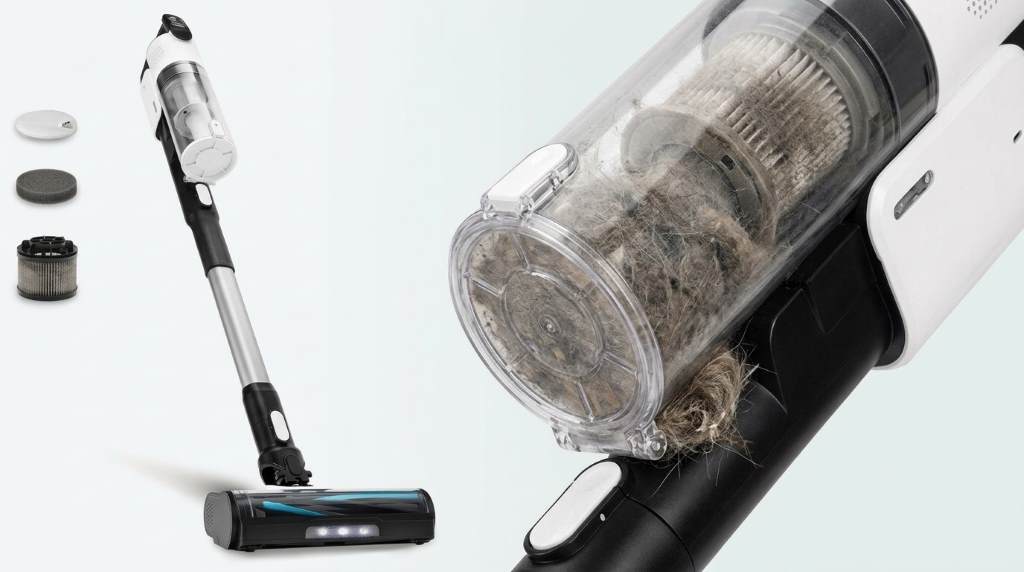
The filtration assembly includes a metal mesh pre-filter and a high-efficiency pleated HEPA cartridge. Specifically, the metal screen blocks pet hair, large crumbs, and textile lint. In contrast, the dense pleated HEPA filter captures microscopic dander, pollen, and fine dust. Indeed, this dual-barrier design ensures clean exhaust air while maintaining powerful intake suction.
However, fine powder accumulation gradually clogs microscopic pores within the pleated HEPA media. Consequently, the motor works against severe backpressure, leading to noticeable suction loss and overheating. Sturdy rubber gaskets seal all joint connections between the canister, wand, and floor head. As a result, maintaining clean filters preserves airtight vacuum integrity across every cleaning session.
Checking and Emptying the Overfilled Dust Canister
An overfilled dust canister is the most common cause of sudden vacuum suction loss. First, examine the transparent collection chamber to see if debris exceeds the maximum fill line. When debris packs above the fill line, airflow cannot spin freely through the cyclone. In fact, compacted dirt blocks intake vents and chokes the suction motor rapidly.
Turn off the vacuum and position the canister directly over a household trash bin. Then, press the quick-release latch on the bottom door to dump collected debris. Also, tap the plastic canister sides gently against the trash rim to dislodge clinging powder. Inspect the central cyclonic metal mesh cone for wrapped hair or lint clusters.
If hair wraps around the metal cone, twist the canister assembly off the motor housing. Then, pull the mesh cone out and wipe it clean with a dry microfiber cloth. Furthermore, wash the plastic canister with warm soapy water if sticky residue coats the walls. Allow the canister to dry completely before reattaching it to the vacuum body.
Washing and Maintaining the HEPA Filter Assembly
Washing your filtration elements regularly restores maximum cyclonic velocity and prevents motor strain. First, locate the filter compartment situated at the top or rear of the motor housing. Then, twist the filter cover counterclockwise to release the pleated HEPA cartridge. Next, pull the foam pre-filter out of its molded plastic housing carefully.
Hold both filter elements under cool running tap water from your bathroom or kitchen sink. Rinse the pleated HEPA paper from the clean side outward to flush trapped dust out. However, never scrub delicate pleated filter fibers with stiff abrasive cleaning brushes. Also, avoid using dish soap, bleach, or hot water on sensitive filter media.
Squeeze the foam pre-filter gently under running water until runoff water flows crystal clear. Then, shake excess moisture from both filters and place them on a clean dry towel. Allow all filter components to air dry for twenty-four hours in a warm room. Indeed, running damp filters through a vacuum motor causes catastrophic electrical failure.
Levoit Suction Loss Symptoms and Diagnostic Guide
Identifying the root cause of suction loss saves time and prevents unnecessary part replacements. Furthermore, methodical troubleshooting ensures you restore peak performance safely. The table below outlines common suction loss symptoms, probable causes, and practical corrective actions.
| Observed Symptom | Probable Root Cause | Corrective Action |
|---|---|---|
| Motor Whines Loudly | Clogged HEPA filter or pre-filter | Rinse filters thoroughly and dry 24 hours |
| Weak Floor Pickup | Hair tangled around brush roller | Remove roller and cut away wrapped strands |
| Sudden Motor Shutdown | Airway clog triggering thermal sensor | Clear wand blockage and allow motor cooldown |
| Dust Leaking from Vents | Damaged or improperly seated filter | Inspect rubber filter seals and reseat tightly |
A high-pitched motor whine indicates severe airflow restriction behind the filtration elements. In contrast, weak floor pickup usually points to tangled brush rollers or worn drive belts. Meanwhile, sudden motor shutdowns occur when thermal safety sensors protect overheated motors from clogs. Finally, dust blowing from exhaust vents signals a torn filter or misaligned seal gasket.
Inspecting Extension Wands and Intake Ducts for Blockages
Large debris like paper clips, dried leaves, or bottle caps can lodge inside the wand. First, disconnect the motorized floor head from the lower end of the metal extension wand. Then, detach the upper wand neck from the handheld motor body completely. Next, look through the hollow metal tube toward a bright light source to inspect the passage.
If you observe a blockage, push a long broom handle or wooden dowel through the wand. Carefully dislodge the stuck debris clump without scratching or denting the inner metal walls. In fact, even partial clogs reduce air velocity by more than sixty percent. Furthermore, check the swiveling elbow joint on the motorized floor nozzle for trapped objects.
Inspect the rubber intake flap located inside the floor nozzle connector neck. Ensure the flexible flap moves freely and closes properly when suction stops. Also, check the electrical pin connectors on the wand ends for bent pins or dirt. Clean electrical pins guarantee uninterrupted power transfer to the motorized brush roller.
Clearing the Motorized Brush Roll and End Bearings
Hair tightly wound around the brush roller increases mechanical friction and reduces floor intake power. First, turn the motorized floor head upside down on a flat, clean surface. Then, locate the roller release latch on the side or bottom of the nozzle. Slide the locking tab to the open position and lift the brush roller out.
Use small scissors or a seam ripper to cut wrapped hair along the designated roller groove. Pull severed hair strands away by hand and inspect the roller end bearing caps. Hair wound tightly around end bearings creates excessive friction heat that can melt plastic housings. Clean the bearing caps thoroughly to ensure completely smooth roller rotation.
Wipe the interior brush chamber with a damp microfiber cloth to remove static dust. Then, snap the clean roller back into its housing until the locking tab clicks. Spin the roller by hand to verify that it rotates freely without catching. Therefore, your motorized floor nozzle delivers maximum agitation and suction across carpets.
Battery Diagnostics and Thermal Protection Reset
Lithium-ion battery performance directly impacts motor suction power and overall runtime. First, check the LED battery status indicator on the handle display during active use. If the battery charge drops below twenty percent, suction power decreases noticeably. Recharge the battery fully using the original manufacturer power adapter before continuing cleaning.
If the vacuum shuts off abruptly while cleaning, the thermal overload protector has likely tripped. First, disconnect the charger and let the vacuum cool for forty-five minutes indoors. Then, inspect the filters, dust canister, and wand for hidden airflow restrictions. Clearing obstructions allows the internal thermal switch to reset automatically once the unit cools.
Additionally, avoid storing the battery in unheated garages subject to freezing temperatures. Extreme temperatures degrade lithium cells and cause premature battery voltage drops. Store your vacuum and battery pack in a climate-controlled room between sixty and eighty degrees. Consequently, your cordless vacuum maintains robust power and long battery lifespan.
Frequently Asked Questions
How often should you replace the Levoit cordless vacuum HEPA filter?
Replace the HEPA filter every six months to maintain peak suction and air filtration.
Can you wash the motorized floor nozzle with water?
No, the floor nozzle contains electrical wiring and motors that water ruins permanently.
Why does my Levoit vacuum turn off after only a few seconds?
A choked filter or jammed brush roll triggers an automatic motor safety shutdown.
Can you use the vacuum while the filter is still slightly damp?
Never operate the vacuum with damp filters because moisture destroys electrical motor windings.
How do you know if the vacuum battery needs replacement?
If runtime drops below five minutes on a full charge, replace the battery pack.
Conclusion
Resolving suction loss in your Levoit cordless vacuum requires simple, systematic maintenance checks. Regular canister emptying, monthly filter washing, and clearing brush roller hair restore peak airflow velocity. Furthermore, checking wands for clogs and observing proper filter drying times protect the motor. Inspect your vacuum filters today, clear any obstructions, and restore powerful floor suction!