

A vacuum cleaner is a household appliance that has been around for more than 100 years. It was invented in the 1880s, and it’s since evolved into many models, each with its own pros and cons.
Vacuum cleaners are an essential part of every home because they help to keep dirt at bay, which can lead to harmful illness if not cleaned up regularly. But what kind of vacuum cleaner should you get? There are several types of vacuum cleaners in market today, each one designed for specific purposes or needs. Let’s take a look at some popular vacuums types and how they work!
Vacuum cleaners are an appliance that sucks up dirt and other materials, creating a partial vacuum to pick up dust. Vacuum machines use electric motors or air-whips (the old-fashioned kind) for power supply and operation. The first of these vacuums were invented in 1906 by Hubert Cecil Booth, who called it “Puffing Billy”.
Before this time period, large canister models with hoses dominated the market because they required more suction than a person could generate manually. Today’s smaller vacuums still operate on the same principle: a fan creates negative pressure that sucks household grime into a container.
If you have any issues, just get in touch with our friendly support team to report incorrect information. Many Thanks!
Vacuum cleaners are divided into five basic types. They are classified on basis of size, shape, and features. Some vacuum cleaners are designed as 2 in 1 vacuum cleaners.
- Upright vacuum
- Canister vacuum
- Handheld vacuum
- Stick vacuum
- Robotic vacuum
- Wet and dry vacuum cleaner
1. Upright Vacuum

The upright vacuum cleaner is a type of vacuum cleaner designed to be operated by the user standing up. These types are designed for large areas like carpets and hardwood floors, so they’re great if you have both. Unlike most other types of vacuum cleaners, it can be used on all household flooring surfaces and stairs without having to change attachments. Onboard attachments which allow them to do versatile jobs such as cleaning up after pets or removing dust from furniture pieces in different rooms throughout the house.
These cleaners come in both corded and cordless models, but they are typically heavier than canister or stick-style vacuums because there’s a lightweight motorized head that needs to be carried around.
PROS
- Powerful vacuum with variety of power settings available
• Recommended for high pile carpets and rugs
• No need to bend down, while you vacuum
• Cost effective
CONS
- Difficult to maneuver being heavyweight
• Difficult to clean under low profile furniture
2. Canister Vacuum

Canister vacuum cleaners are popular in Europe. These powerful, versatile and convenient machines have several attachments to suit every cleaning need – from hardwood floors or stairs; they’re the perfect choice for you. The canister design makes this type of machine easy maneuverability, while on carpeted areas it may be less efficient than those with upright motors.
The versatility of this type of vacuum cleaner makes it well-suited for homes with pets or allergies. It is also possible to purchase attachments that allow you to clean furniture, stairs, curtains, upholstery and more.
PROS
- Easy to maneuver
• Gives effective cleaning over hardwood floors and stairs
• Quieter operation
CONS
- Less powerful than upright vacuums
• Don’t give good clean over carpets
• Less compact than upright cleaners
3. Handheld Vacuum
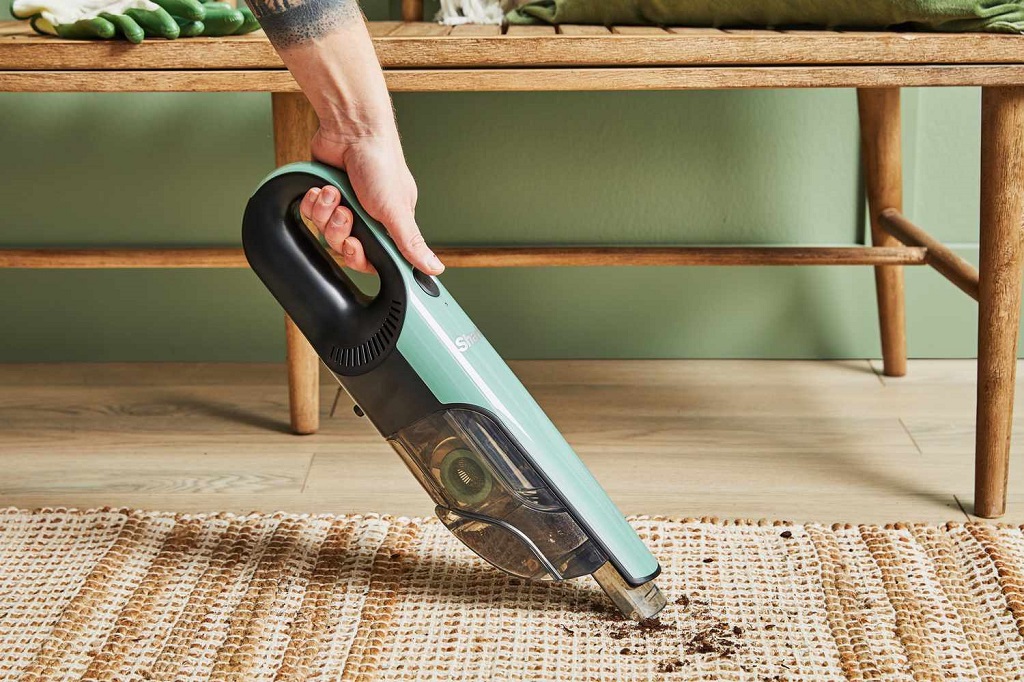
Vacuuming is a daily chore for many households. It’s one of the most hated jobs because it’s tedious and time-consuming. But, with a handheld vacuum cleaner, you can get the job done in no time. A handheld vacuum cleaner is a device that can be used as an alternative to a traditional upright or canister vacuum. The device is powered by electricity and has a long, flexible tube with a nozzle on the end. It’s typically battery operated, cordless and portable for easy maneuverability around furniture and other obstacles.
They’re great for tight corners, hard-to reach areas that need urgent cleaning or small spills on the ground.
What type of handheld vacuum should I buy? There are two main types, i.e., cordless and corded. Cordless models rely on batteries and therefore do not require an electrical outlet to operate, while corded ones will need to be plugged into an electric socket throughout use. If you have small children or pets that might cause damage by pulling cords, then a cordless model may be best suited.
PROS
- Recommended cleaning tight corners, hard to access areas
• Effective in cleaning spills and small messes
• Lightweight
CONS
- Less powerful than canister and upright vacuums
• Cordless handheld vacuums have inadequate functional time
• Don’t give deep clean
4. Stick Vacuum

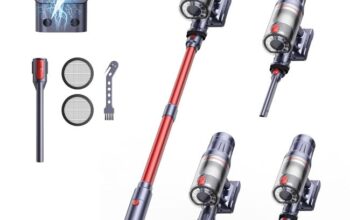
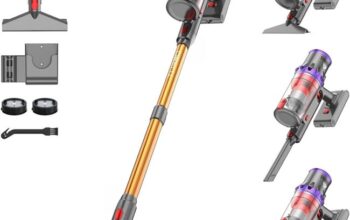
A stick vacuum is a great tool for cleaning nooks and crannies that are too tight for an upright or handheld. It has the advantage of being light enough to carry around, yet powerful when needed.
This lightweight and versatile device cleans carpets, hardwood floors, upholstery, stairs, and more. People often call them “handheld” vacuums because of their small size, eliminating the need for heavy lifting! The best part of using a stick vacuum is the convenience; you don’t have to move furniture or lug around heavy hoses. You just grab it and go!
PROS
- Lightweight and compact
• Effective in cleaning small messes
• Portable and convenient to use
CONS
- Lacks useful features and attachments
• Not a recommended choice for deep cleaning
• Limited functional time on battery
5. Robotic Vacuum

Robotic vacuums are the latest and modern addition to vacuum cleaner types. They navigate around home freely and perform cleaning jobs on their own. People most commonly use them to clean floors, carpets, and other surfaces in homes or offices. You can program a robotic vacuum cleaner to suck up dirt on certain days at specific times so it does not interfere with your schedule.
A robotic vacuum cleaner is a programmable machine that cleans your house at set times throughout the day. It automatically maps out your house, cleans each room, and then returns to its docking station when finished. The robotic vacuum cleaners are able to get into areas of your home that would otherwise be difficult for you to reach or clean on your own. This saves you time and money in comparison with hiring an outside service. Although, they are not powerful as compared to traditional vacuums, but they do offer convenience and easy clean.
The main thing people love about this product is how easy it is for them to use – no more bending down while trying not bump into furniture. You’ll also save energy because the robot does all the work; there’s no need for a human.
PROS
- Saves a lot of time
• Saves layout of home and navigates on its own
• Intelligent cleaning by using sensors
CONS
- Limited operational time
• Compromised cleaning over high pile rugs
• Layman might find it difficult to operate
6. Wet and Dry Vacuum Cleaner

Wet and dry vacuum cleaner is an older technology, and it’s one of essential and versatile tool available in market. People used them earlier to handle heavy cleaning jobs in commercial buildings and referred to them as shop vacuums. Nowadays, people widely use small, wet, and dry vacuum cleaners for domestic purposes. These cleaners allow you to go one step beyond traditional vacuum cleaners. Their design closely resembles canister vacuums.
This wet and dry vacuum picks up dirt, debris, wet spots, and spills. It’s perfect for homes with kids because it handles frequent liquid spills with ease. These machines come equipped with interchangeable brushes, each for dust and liquid. It consists of two chambers; each for collecting dry dust and liquids.
Application areas of wet/dry vacuums include dust collection, liquid waste handling, collecting ashes from fireplace and making piles of leaves in garden.
PROS
- Versatile and flexible
• Powerful suction
• Saves time
CONS
- Heavy weight makes difficulty in movement
• May produce undesired smell
Conclusion
We hope this post has been informative and helpful. You should be able to better understand the differences between different types of vacuum cleaners. We anticipate that we’ve helped make it easier for you to find the right vacuum cleaner by going through what each type has to offer and their pros and cons. Our guide will help steer you in the right direction when it comes to choosing between an upright vacuum, canister vacuum, handheld vacuum, stick vacuum and robotic vacuum.
Before ending the article, let’s conclude with applications of each category of vacuum. Here’s a quick rundown:
Upright vacuum cleaners: Homeowners most commonly use these in homes with high-pile carpeting.
Canister vacuums: These have attachments that work well on stairs and other hard-to-clean areas.
Handheld vacuum cleaners: These provide light cleaning for small spaces like car interiors or couches.
Stick vacuums: These combine features of both handheld and upright models into one convenient package, making them perfect for quick touch-ups.
Robotic vacuums: If your home requires daily cleaning, these are ideal because they seamlessly move through different rooms without requiring guidance.

:max_bytes(150000):strip_icc()/spr-detail-shark-ultra-cyclone-pro-cordless-handheld-vacuum-ch901-amazon-dburreson-007-1-9c365b68e63b4974abe6da45d2ed0423.jpeg)