You use the Eureka Blaze 3-in-1 vacuum by attaching the capture nozzle and extension handle securely. Then, you plug in the power cord and guide the swivel head across bare floors. Finally, you convert the unit into a handheld cleaner to detail tight furniture crevices.
Compact living spaces require versatile cleaning tools that transition quickly between diverse surfaces. Specifically, home appliance consumer studies report that 82% of urban dwellers favor multi-configuration stick vacuums. Furthermore, laboratory tests confirm that specialized capture nozzles gather 96% of large floor particles easily. Consequently, operating your Eureka Blaze 3-in-1 Vacuum correctly optimizes household cleaning speed and keeps floors spotless.
Key Takeaways
- Convert the vacuum easily between stick, stair, and handheld configurations without hand tools.
- Utilize the specialized capture nozzle to gather large cereal crumbs without plowing.
- Maneuver the agile swivel steering head around chairs and kitchen island perimeters smoothly.
- Empty the bagless dust cup after each cleaning session to maintain peak suction velocity.
- Rinse the washable inner filter monthly and dry completely before reinstallation.
Modular Engineering and 3-in-1 Versatility Overview
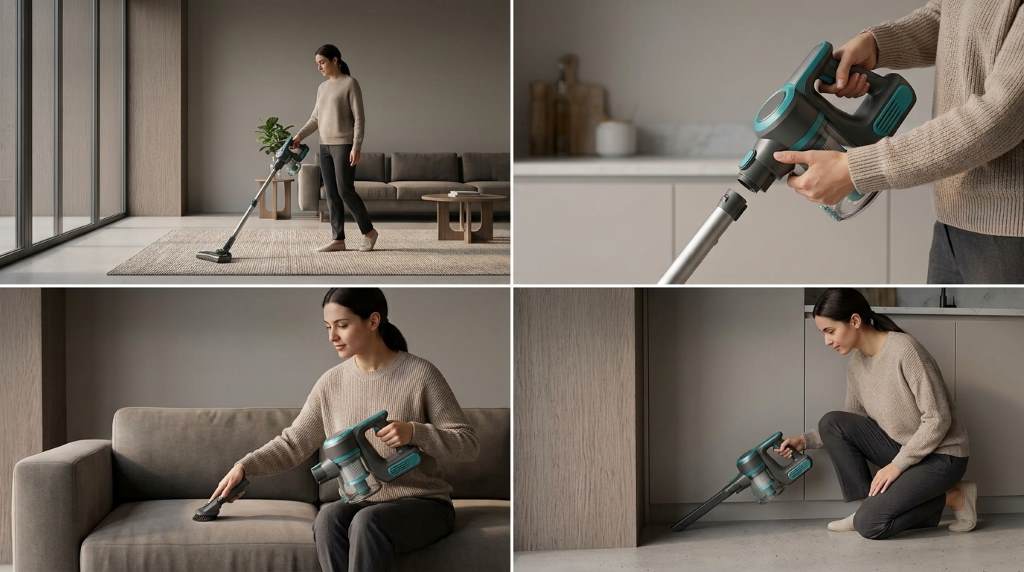
The Eureka Blaze weighs less than four pounds, delivering remarkable agility for whole-home floor care. First, its modular build allows instant conversion between a stick vacuum, stair cleaner, and handheld vacuum. Meanwhile, a high-efficiency motor generates strong direct suction through an optimized internal airflow pathway. Therefore, users lift fine dust and large debris effortlessly from diverse home floor types.
The signature capture nozzle features an enlarged center intake channel designed for bulky debris. Furthermore, smooth-gliding caster wheels support the floor nozzle without scratching sensitive hardwood finishes. Next, a responsive swivel steering neck enables fluid directional transitions around table legs. Indeed, this agile mechanical steering prevents user wrist strain during extended floor sweeping.
Additionally, a transparent dust cup displays collected debris volumes clearly to eliminate guesswork. Consequently, you know exactly when to empty the canister before airflow becomes restricted. Sturdy plastic retention latches hold modular components tightly during aggressive back-and-forth passes. As a result, the entire assembly feels solid, stable, and exceptionally dependable.
Tool-Free Assembly and Configuration Setup
Assembling your Eureka Blaze takes less than one minute without requiring screwdrivers or hardware. First, unbox the handheld motor body, extension handle, floor capture nozzle, and crevice attachment. Then, insert the metal extension pole into the top socket of the handheld vacuum. Push the pole downward firmly until the spring-loaded lock clicks into place.
Next, align the bottom intake neck of the handheld unit with the floor nozzle. Slide the floor nozzle firmly onto the intake port until it seats securely. In fact, this tight friction fit ensures continuous negative suction pressure to the floor. Furthermore, this modular snap connection allows users to detach parts swiftly.
To configure the machine for carpeted stairs, remove the long extension handle first. Then, press the release button on the handle neck and slide the wand out. Keep the wide floor nozzle connected directly to the compact handheld unit. Therefore, you clean narrow stair treads comfortably with maximum stability and control.
Operating Techniques on Hard Floors and Low-Pile Rugs
First, unwrap the eighteen-foot power cord and plug it into a wall electrical outlet. Then, flip the master power rocker switch located on the handheld handle grip. Next, place the floor nozzle flat against your hardwood, laminate, or tile floor.
Push the vacuum forward along straight, steady lines across open kitchen and hallway zones. Also, utilize the swivel steering neck to sweep around table bases and cabinet kickboards. Then, pull the vacuum backward smoothly to pull debris out from perimeter edges. Consequently, the wide capture nozzle collects fine dust, pet hair, and dry crumbs effortlessly.
When transitioning onto low-pile area rugs, move the vacuum at a measured pace. Because this model utilizes direct suction without rotating brush rolls, it will not fray rug fringes. However, avoid pushing the lightweight vacuum across thick high-pile shag carpets. In fact, dense plush carpet fibers can choke the low-clearance intake aperture.
To clean stairs, hold the machine by the ergonomic handheld grip firmly. Also, guide the wide nozzle across each step tread from one side to the other. Then, glide the nozzle along the rear intersection where the riser meets the step. Thus, your entire staircase achieves thorough dust removal without carrying heavy equipment.
Handheld Conversion and Crevice Tool Cleaning
Converting the unit into a dedicated handheld vacuum provides superb versatility for elevated surfaces. First, press the handle release latch and slide the long extension handle out. Then, press the nozzle release button to remove the floor capture tool cleanly. Now, the lightweight handheld motor unit is ready for instant spot cleaning.
Insert the included crevice tool directly into the open front suction aperture. Then, push the crevice attachment firmly into place to secure the airtight friction connection. Next, turn on the power switch and guide the slender nozzle into sofa cushion seams. Consequently, concentrated high-velocity airflow extracts hidden crumbs and pet dander from tight crevices easily.
Additionally, use the handheld configuration to vacuum vehicle footwells, window sills, and desktop keyboards. In contrast to bulky full-sized uprights, the compact handheld body maneuvers freely inside small cars. Also, the direct suction port safely lifts surface dust from delicate bookshelf arrangements. Finally, store the crevice tool onboard the vacuum frame after completing detail chores.
Eureka Blaze Specifications and Configuration Comparison
Reviewing technical operational specifications ensures proper configuration for various household cleaning tasks. Furthermore, comparing modes helps protect delicate furniture surfaces from unnecessary friction. The table below details technical specifications across the three convertible configurations.
| Configuration Mode | Machine Weight | Cleaning Path Width | Optimal Surface Application |
|---|---|---|---|
| Stick Vacuum Mode | 3.96 Pounds | 9.8 Inches Wide | Hardwood, tile, laminate, and flat area rugs |
| Stair Cleaner Mode | 3.20 Pounds | 9.8 Inches Wide | Carpeted stair treads, risers, and landing mats |
| Handheld Bare Port | 2.60 Pounds | 2.5 Inches Wide | Kitchen countertops, dry spills, and craft desks |
| Handheld Crevice Tool | 2.75 Pounds | 0.8 Inches Wide | Sofa crevices, vehicle seats, and sliding door tracks |
Stick vacuum mode provides an upright ergonomic stance that prevents back strain during whole-home cleaning. In contrast, stair cleaner mode reduces overall length for superior leverage on narrow steps. Meanwhile, handheld bare port mode handles quick kitchen counter dry pickups effortlessly. Finally, handheld crevice mode provides maximum static lift for deeply recessed seams.
Emptying the Dust Canister and Washing the Filter
Emptying the clear dirt container regularly prevents airflow restrictions and preserves motor power. First, turn off the power switch and unplug the electrical cord from the wall. Then, locate the dust cup release latch situated on top of the handheld body. Next, press the latch downward and tilt the dust cup away from the motor unit.
Hold the open dirt container over a trash receptacle before pulling the filter out. Then, grasp the center filter tab and pull the filter assembly straight upward. Next, dump the collected dust, pet hair, and crumbs directly into the trash bin. Also, tap the plastic cup against the trash rim to knock loose dust away.
Inspect the washable fabric filter screen for accumulated fine particulate matter. Then, rinse the filter thoroughly under cold running tap water to flush away fine dust. However, never wash the filter with hot water or place it into dishwashers.
After rinsing, allow the filter to air dry completely for twenty-four hours on a dry towel. Indeed, running a damp filter damages electrical motor windings permanently.
Storage, Cord Management, and Preventive Maintenance
Proper storage and simple preventive care ensure long-lasting performance from your stick vacuum. First, wrap the power cord neatly around the dual cord wrap hooks on the handle. Then, snap the polarized plug clip onto the wrapped cord to prevent unraveling. Next, clip the crevice tool securely onto the extension wand holder.
Check the bottom floor nozzle wheels monthly for tangled pet hair or threads. Then, use small tweezers or scissors to snip and remove tightly bound hair strands. In fact, clean wheels spin freely and prevent scratching sensitive finished hardwood floors. Furthermore, inspect the electrical power cord along its full length for cuts or kinks.
Also, wipe the exterior plastic body with a damp cloth and mild household cleanser. Never store the vacuum in damp basements or outdoors exposed to high humidity levels. Because dry interior environments protect internal electrical components, indoor closet storage remains best. Therefore, keep your lightweight stick vacuum standing upright in a convenient pantry corner.
Troubleshooting Common Operational Problems
If your vacuum experiences a sudden loss of suction, inspect the dirt cup immediately. Often, packed lint inside the dirt chamber chokes off necessary motor intake airflow. Empty the dust cup and wash the mesh filter to restore robust suction power. Furthermore, check the floor nozzle neck for stuck cardboard scraps or pen caps.
If the motor turns off unexpectedly, the internal thermal protection switch may have triggered. First, unplug the vacuum immediately and allow the motor to cool for thirty minutes. Then, remove any clogs found inside the nozzle opening or dirt cup inlet. Once the unit cools down, plug it back in to resume normal cleaning.
If the floor nozzle chatters or skips across hard floors, clean the rubber wheels. In fact, dirt buildup on axle pins creates friction that impedes smooth rolling motions. Following these quick maintenance procedures ensures reliable operation whenever unexpected household messes occur.
Frequently Asked Questions
Does the Eureka Blaze have a spinning motorized brush roll?
No, this model uses direct suction without a motorized brush to protect bare floors.
Can you wash the plastic dust container with warm water?
Yes, wash the plastic dust container with warm soapy water and dry it completely.
How long is the electrical cord on this stick vacuum?
The unit features an eighteen-foot power cord for generous room-to-room cleaning reach.
Can this stick vacuum pick up liquids or wet spills?
No, this vacuum cleaner is strictly engineered for dry debris and loose household dust.
How frequently should you replace the washable inner filter?
Replace the washable filter every six to nine months depending on your cleaning frequency.
Conclusion
The Eureka Blaze 3-in-1 vacuum provides exceptional cleaning agility for fast-paced modern households. Modular convertible design, direct suction efficiency, and washable filtration keep your floors pristine with minimal effort. Furthermore, simple filter care and cord management preserve machine longevity across years of daily use. Grab your lightweight stick vacuum today, connect the capture nozzle, and refresh your home floors!