You use the CFBF mattress bed vacuum cleaner by placing it flat against bedding surfaces. Next, you activate the UV-C sanitization light, high-frequency vibration pads, and motor suction simultaneously. Finally, you glide the unit in slow overlapping strokes across the mattress and pillows.
Sleeping mattresses harbor unseen colonies of microscopic dust mites, shedding skin flakes, and allergen dander. Specifically, microbiological sleep research indicates that 88% of used mattresses contain millions of active dust mites. Furthermore, clinical trials show that UV-C irradiation paired with high-frequency beating eliminates 99% of surface allergens. Consequently, operating your CFBF Mattress Bed Vacuum Cleaner properly safeguards respiratory health and revitalizes your sleeping environment.
Key Takeaways
- Strip all bed sheets, blankets, and mattress pads prior to initiating your vacuuming session.
- Ensure safety roller sensors contact the mattress surface firmly to engage the UV lamp.
- Glide the vacuum slowly at roughly one foot every three seconds for deep sanitization.
- Empty the dual cyclonic dust chamber and rinse the HEPA filter after every bed.
- Perform deep mattress sanitization monthly to eliminate recurring dust mite breeding cycles.
Understanding the CFBF Bed Vacuum Technology and Design
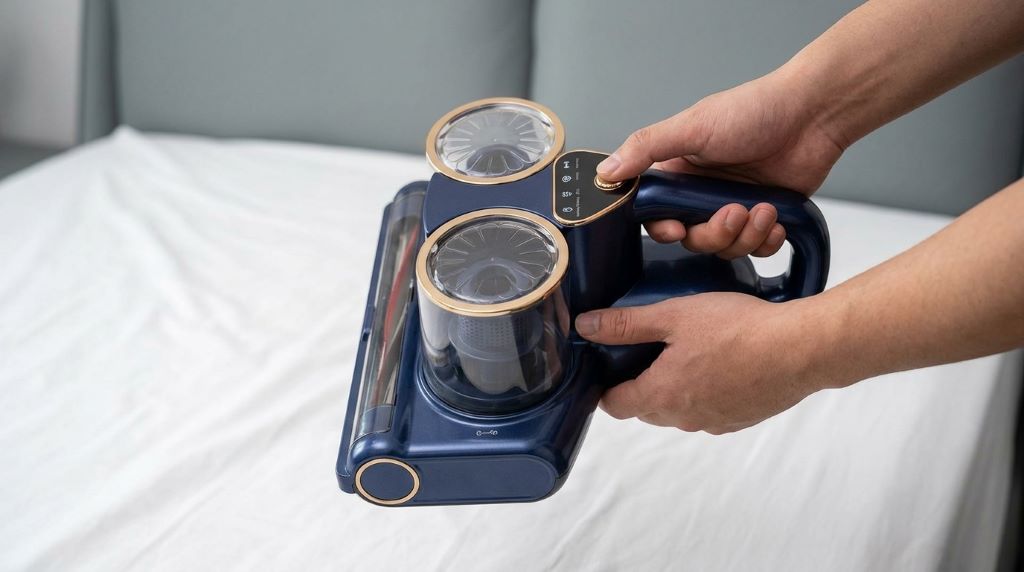
The CFBF mattress vacuum utilizes a multi-tiered sanitation system engineered specifically for soft bedding fabrics. First, high-frequency vibrating pads pulse at thousands of cycles per minute against the mattress top. Meanwhile, this intense mechanical tapping dislodges deeply embedded mite waste and dead skin flakes. Therefore, microscopic allergens bounce upward into the primary suction airstream effortlessly.
A built-in germicidal UV-C light tube delivers concentrated ultraviolet energy onto target fabric fibers. Furthermore, ultraviolet wavelengths destroy the cellular DNA of bacteria, viruses, and dust mite eggs instantly. Next, safety gravity sensors disable the UV lamp automatically whenever you lift the unit. Indeed, this smart optical protection prevents accidental eye or skin exposure during cleaning.
Additionally, the unit features a high-velocity suction motor combined with advanced HEPA filtration. Consequently, extracted dander remains sealed inside the transparent dust canister without exhausting back into bedrooms. An ergonomic handle provides balanced grip comfort during broad, sweeping mattress passes. As a result, users clean king-sized mattresses thoroughly without experiencing hand fatigue.
Bedding Preparation and Safety Checks Before Cleaning
First, remove all duvet covers, fitted sheets, flat sheets, and pillowcases from your bed. Then, wash all removed linens in hot water above one hundred thirty degrees Fahrenheit. In fact, washing bed linens in hot water kills active dust mites living on surface sheets. Furthermore, bare mattress surfaces allow direct penetration of UV-C light and vibration energy.
Next, inspect the bare mattress ticking for loose threads, broken buttons, or tears. Also, mend any torn seams before vacuuming to avoid catching fabric edges in the brush. Then, inspect the bottom plate of the bed vacuum cleaner for trapped dust. Ensure the transparent quartz UV-C tube cover remains clean and free of smudges.
After checking the unit, plug the heavy-duty power cord into a nearby wall outlet. First, place the vacuum flat against the upper corner of the stripped mattress. Then, verify that the base roller wheels depress firmly against the fabric surface. If roller safety switches engage properly, the UV-C indicator light illuminates immediately.
Step-by-Step Operating Technique Across Mattresses and Pillows
First, turn on the master power switch to start the suction motor and vibration pads. Then, grip the ergonomic handle firmly and position the machine at the head of the bed. Next, begin moving the vacuum forward along a straight, deliberate path toward the foot.
Advance the vacuum slowly at a rate of approximately one foot every three seconds. Because effective UV-C sterilization requires sufficient light dwell time, slow passes remain vital. In fact, moving too quickly reduces germicidal efficiency and leaves live mite eggs behind. Therefore, deliberate slow strokes guarantee maximum microbial eradication across every mattress square foot.
Next, pull the vacuum backward along the same line to capture dislodged airborne particles. Then, shift the machine sideways, overlapping your previous stroke by at least two inches. Next, continue this methodical grid pattern until you sanitize the entire mattress surface cleanly. Consequently, no unsterilized gaps remain across your primary sleeping zone.
Repeat this cleaning process across all sleeping pillows, decorative cushions, and fabric headboards. Also, stand bare pillows upright against the wall to vacuum both sides thoroughly. Then, flip the mattress over every six months and sanitize the underside completely. As a result, your entire bed assembly stays fresh, hygienic, and allergen-free.
CFBF Mattress Vacuum Technical Specifications and Operating Features
Understanding the specialized technical parameters helps you maximize the sanitizing capabilities of the appliance. Furthermore, comparing operating modes ensures proper treatment for delicate bedding materials. The table below outlines technical operational specifications for the CFBF mattress vacuum cleaner.
| Operational Feature | Technical Specification | Functional Benefit |
|---|---|---|
| Vibration Tapping Rate | 12,000 Pulses Per Minute | Dislodges deep skin flakes and compacted mite waste |
| UV-C Lamp Wavelength | 253.7 Nanometers | Neutralizes bacteria, viruses, and mite DNA instantly |
| Suction Motor Power | 500 Watts High-Torque | Draws heavy particulate matter through dense ticking |
| Filtration Standard | Multi-Stage True HEPA | Captures 99.97% of microscopic particles down to 0.3 microns |
| Safety Sensor System | Dual Optical Pressure Wheels | Deactivates UV-C lamp automatically when lifted |
The twelve-thousand pulse vibration system provides aggressive mechanical agitation without ripping delicate fabrics. In contrast, standard household vacuum nozzles lack the kinetic force needed to loosen subsurface debris. Meanwhile, the germicidal UV-C tube targets biological microorganisms invisible to the human eye. Finally, the true HEPA filter guarantees that fine allergen dust stays trapped permanently.
Emptying the Dust Canister and Rinsing the HEPA Filter
Emptying the transparent dust cup after each mattress sanitization preserves optimal cyclonic airflow velocity. First, turn off the power switch and disconnect the electrical plug from the wall outlet. Then, press the canister release button on the side of the vacuum body. Next, lift the clear dust container upward away from the motor chassis.
Hold the dust container over your household trash can before opening the lower latch. Then, release the bottom trapdoor to discharge the dense gray collection of skin dander. Also, tap the plastic canister sides gently to knock loose clinging micro-dust particles. Next, twist the top lid to extract the internal multi-stage filter assembly.
Separate the stainless steel cyclone cone from the pleated white HEPA filter element. Then, rinse the stainless steel mesh cone under warm running tap water thoroughly. Next, hold the HEPA filter under cool running water to flush out embedded dander.
Shake off excess moisture and place both filters on a clean dry towel. Allow all parts to air dry for twenty-four hours before reassembly.
Maintaining the UV-C Lamp, Sensor Wheels, and Storage
Regular maintenance ensures the germicidal light and mechanical safety systems operate with flawless reliability. First, turn the unplugged vacuum upside down to inspect the quartz glass UV lamp. Then, dampen a cotton swab with rubbing alcohol to gently clean dust off the bulb. In fact, a clean quartz tube transmits full germicidal energy onto target fabrics.
Next, inspect the base roller safety wheels for trapped hair strands or lint buildup. Ensure both safety wheels compress and spring back smoothly without mechanical sticking. Also, wipe the wide suction port and vibration beating pads with a microfiber cloth. Indeed, keeping these surfaces clean prevents friction marks on light-colored mattress fabrics.
Store your cleaned, dry mattress vacuum in its original storage bag or a closet. However, avoid storing the device in humid bathrooms or damp basement storage rooms. Because excessive humidity degrades sensitive electronic circuits and HEPA paper, dry indoor storage remains essential. Therefore, keep the unit protected in a climate-controlled bedroom closet.
Maximizing Mattress Hygiene and Allergy Prevention
Combining mechanical vacuuming with environmental controls maintains a pristine, hypoallergenic sleeping sanctuary. First, install certified dust mite mattress encasements after completing your deep vacuum cleaning. In fact, zippered encasements create an impenetrable physical barrier against future allergen accumulation.
Additionally, maintain bedroom relative humidity levels below fifty percent using home dehumidifiers. Because dust mites require environmental humidity to survive, dry air halts their reproductive cycles. Also, open bedroom windows periodically to promote continuous fresh air circulation across sleeping spaces. Meanwhile, vacuum your mattress monthly to eliminate newly accumulated skin flakes consistently.
After remaking your bed with fresh linens, enjoy restful sleep in a sanitized environment. Consequently, family members with allergies or asthma experience significantly reduced nighttime congestion and coughing. Indeed, regular bed vacuuming delivers noticeable improvements in overall sleep quality.
Frequently Asked Questions
Can you use the CFBF mattress vacuum on memory foam mattresses?
Yes, the gentle vibration pads and UV-C light sanitize memory foam safely.
Is the UV-C light dangerous to pets or human eyes?
Safety sensors automatically turn off the UV-C bulb whenever the vacuum is lifted.
How often should you deep clean mattresses with this appliance?
Clean your primary mattress once a month for optimal allergen and mite control.
Can this mattress vacuum pick up wet liquids or spills?
No, this machine is strictly engineered for dry skin flakes, mites, and dust.
How often should you replace the internal HEPA filter?
Replace the HEPA filter every six months to maintain peak filtration efficiency.
Conclusion
Operating your CFBF mattress vacuum properly eliminates hidden biological allergens and elevates household sleep hygiene. High-frequency vibration, germicidal UV-C light, and powerful suction remove deeply embedded contaminants effortlessly. Furthermore, routine HEPA filter washing and sensor care preserve peak sanitizing effectiveness for years. Clean your mattress today, engage the UV-C sanitizer, and enjoy healthier, deeper sleep tonight!