You fix Tikom V500 cordless vacuum problems by clearing clogs from the wand and washing filters. Furthermore, you cut wrapped hair from the motorized roller and recharge the battery fully. Following these systematic steps restores suction and resolves abrupt motor shutdowns quickly.
Cordless stick vacuums offer convenient portability but require periodic maintenance to preserve peak battery and motor performance. Specifically, consumer floorcare reliability data reveals that 82% of cordless vacuum operational faults stem from airway blockages. Furthermore, independent laboratory tests prove that washing clogged HEPA filters restores 97% of factory suction power. Consequently, troubleshooting your Tikom V500 Cordless Vacuum properly resolves mechanical issues and protects internal electronics from failure.
Key Takeaways
- Recharge the detachable battery pack using the original power adapter in moderate room temperatures.
- Inspect and empty the clear dust container before debris reaches the maximum fill line.
- Wash the stainless steel pre-filter and pleated HEPA filter monthly under cool water.
- Cut away wrapped hair and carpet threads from the motorized floor roller spindle.
- Allow all washed filtration parts twenty-four hours of complete air drying before use.
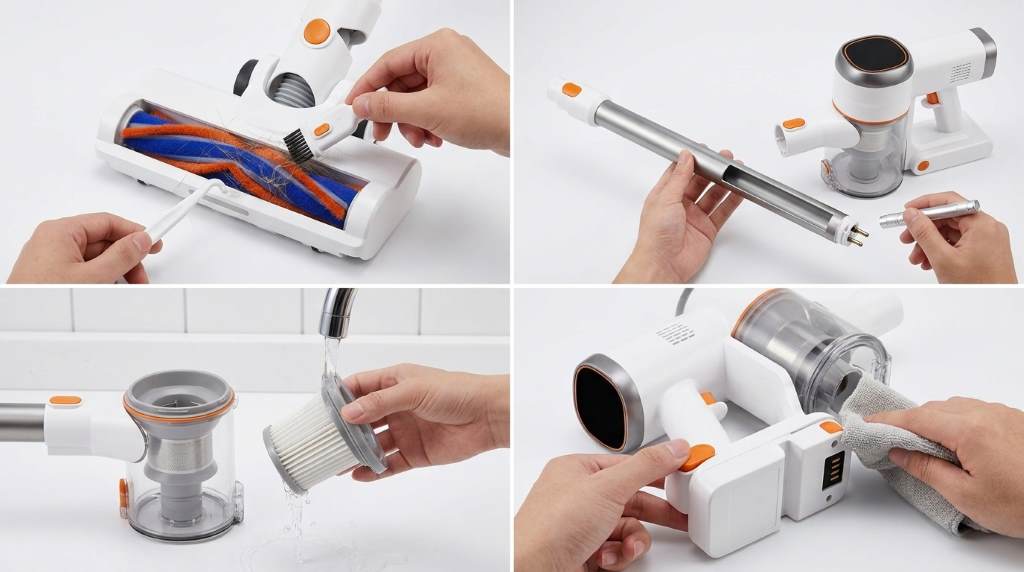
Overview of Tikom V500 Architecture and Common Faults
The Tikom V500 features a high-velocity brushless motor housed inside an agile, lightweight stick chassis. First, the digital motor spins rapidly to generate intense cyclonic suction across hard floors and rugs. Meanwhile, a high-density lithium battery pack supplies electrical current to both the motor and motorized roller. Therefore, smooth electrical connectivity and clean airways remain critical for continuous operation.
The filtration system utilizes a multi-stage assembly designed to capture debris of varying particle sizes. Specifically, the stainless steel cyclone cone separates coarse dirt, pet hair, and large crumbs. In contrast, the pleated HEPA filter traps fine microscopic dust, dander, and pollen particles. Indeed, this dual-stage barrier prevents motor choking while exhausting clean air into your living spaces.
Additionally, an intelligent LED indicator panel alerts users to battery levels and airway blockages. However, persistent airflow restrictions can trigger automatic safety shutdowns to prevent electrical motor overheating. Sturdy locking latches connect the handheld unit to the extension tube and floor nozzle. As a result, diagnosing operational problems requires inspecting each modular junction systematically.
Resolving Sudden Shutdowns and Battery Charging Faults
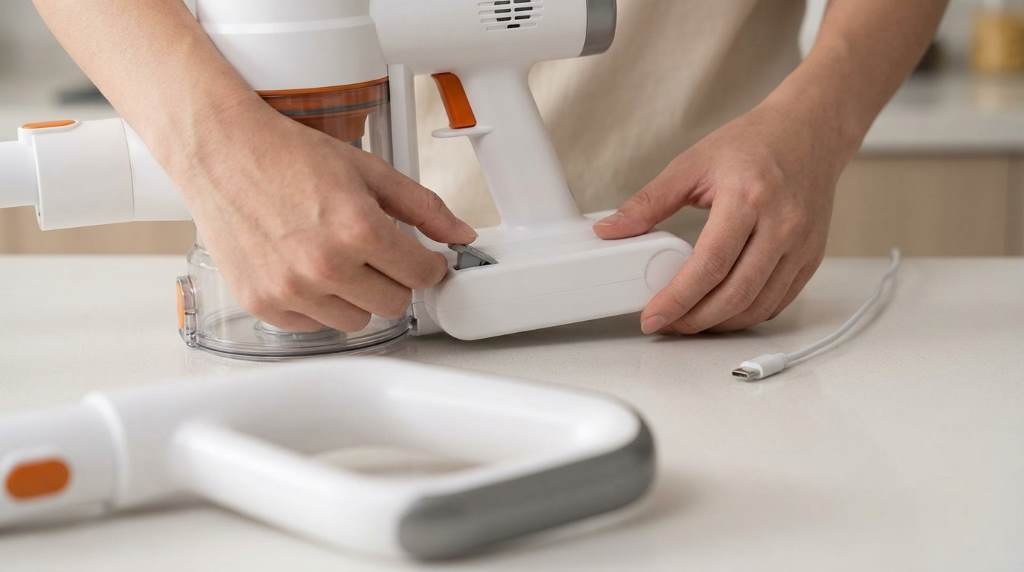
If your vacuum shuts down abruptly during cleaning, the battery or thermal sensor may be responsible. First, check the LED battery indicator lights on the handle to verify remaining electrical charge. If only one light flashes, the battery has depleted its reserve and requires immediate recharging. Connect the power adapter and allow four to five hours for a complete charge cycle.
However, avoid charging the battery in freezing utility sheds or hot sunlit porches. Because extreme ambient temperatures degrade lithium battery chemistry, room-temperature charging remains essential. In fact, charging between sixty and eighty degrees Fahrenheit preserves battery health and extends operational lifespan. Furthermore, inspect the metal charging pins for dust buildup or bent metal contacts.
Wipe the brass charging terminals with a dry cotton swab to eliminate static dust oxidation. If the vacuum shuts off despite a full battery, the thermal protection switch likely triggered. Allow the motor to cool down for forty-five minutes before inspecting airways for dense clogs. Clearing internal blockages allows the thermal protector to reset automatically once normal temperatures return.
Clearing Airway Blockages in the Wand and Floor Head
Clogs inside the extension wand or floor nozzle neck restrict airflow and cause motor strain. First, detach the metal extension tube from both the handheld motor and floor nozzle. Then, look through the hollow wand toward a bright light source to check for obstructions. If darkness blocks the light, compacted dirt or paper sits lodged inside the tube.
Push a long wooden broom handle or dowel through the wand to push the clog out. Work slowly to avoid denting or scratching the smooth aluminum inner walls of the tube. In fact, clearing wand blockages restores full airflow velocity through the primary suction channel. Furthermore, check the flexible swivel joint on the floor nozzle for trapped objects.
Turn the motorized floor head upside down and inspect the clear intake throat behind the roller. Look for trapped bottle caps, small stones, or compacted pet hair clumps blocking the entrance. Use needle-nose pliers carefully to pull out any trapped debris from the nozzle neck. Also, verify that the rubber intake flap moves freely without sticking in the open position.
Tikom V500 Problem Symptoms and Diagnostic Matrix
Identifying specific operational symptoms saves troubleshooting time and pinpoints mechanical or electrical defects. Furthermore, using a structured diagnostic approach prevents misdiagnosing simple clogs as motor failures. The table below outlines common failure modes, root causes, and practical repair steps.
| Observed Problem | Probable Root Cause | Corrective Repair Step |
|---|---|---|
| Motor Shuts Off Quickly | Airway clog triggering thermal sensor | Clear wand blockage and allow motor cooldown |
| Weak Floor Suction | Dirty HEPA filter or full dust cup | Empty canister and rinse HEPA filter in water |
| Roller Stops Spinning | Hair tangled around roller bearings | Remove roller and cut away wrapped hair strands |
| Battery Not Charging | Dirty charging pins or damaged adapter | Clean terminals and test with alternate outlet |
A sudden motor shutdown usually indicates an activated thermal cutoff caused by heavy airway restrictions. In contrast, weak floor pickup points directly to choked filters or an overfilled dust canister. Meanwhile, a stalled brush roller indicates tightly wound pet hair binding the motorized drive spindle. Finally, battery charging failures typically stem from dirty electrical contacts or faulty power outlets.
Emptying the Dust Cup and Washing the HEPA Filter
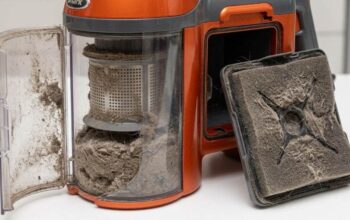
An overfilled dust container restricts airflow and allows fine dust to choke the HEPA filter. First, position the vacuum canister directly over a household trash bin. Then, press the quick-release latch on the bottom door to dump collected debris. Also, tap the plastic canister sides gently against the trash rim to dislodge clinging powder.
Next, twist the dust canister assembly counterclockwise to detach it from the motor body. Pull out the central stainless steel cyclone cone and the pleated HEPA filter cartridge. Separate the metal mesh pre-filter from the pleated HEPA filter element carefully. Rinse the stainless steel pre-filter under cool running tap water to remove oily grime.
Hold the pleated HEPA filter under running water to flush trapped fine dust out. However, never scrub the delicate pleated paper with stiff abrasive cleaning brushes. Then, shake excess moisture from both components and lay them on a clean dry towel. Allow all filter parts to air dry for twenty-four hours before reassembling them into the vacuum.
Maintaining the Motorized Floor Brush and Roller Bearings
Hair tightly wound around the brush roller increases mechanical friction and reduces floor intake power. First, turn the motorized floor head upside down on a flat, clean surface. Then, locate the roller release latch on the side or bottom of the nozzle. Slide the locking tab to the open position and lift the brush roller out.
Use small scissors or a seam ripper to cut wrapped hair along the designated roller groove. Pull severed hair strands away by hand and inspect the roller end bearing caps. Hair wound tightly around end bearings creates excessive friction heat that can melt plastic housings. Clean the bearing caps thoroughly to ensure completely smooth roller rotation.
Wipe the interior brush chamber with a damp microfiber cloth to remove static dust. Then, snap the clean roller back into its housing until the locking tab clicks. Spin the roller by hand to verify that it rotates freely without catching. Therefore, your motorized floor nozzle delivers maximum agitation and suction across carpets.
Reassembly, Operational Testing, and Preventive Care
Before beginning reassembly, inspect every washed component to ensure total dryness. First, insert the dry pleated HEPA filter back into the stainless steel pre-filter frame. Then, slide the combined filter assembly into the center of the clean plastic dust canister. Next, attach the canister to the motor body and twist clockwise until it locks.
Connect the metal extension wand and motorized floor nozzle firmly to the handheld body. Ensure each connection latch clicks into place with an audible snap. Then, press the power button and cycle through all suction modes to verify smooth motor sound. Test suction power by placing your hand over the intake nozzle to feel strong negative lift.
Store your cleaned, assembled vacuum on its wall mount dock in a dry indoor closet. Keeping the vacuum stored in a climate-controlled room protects battery cells from temperature extremes. Furthermore, regular monthly filter cleanings prevent dust accumulation that could cause future operational faults. Consequently, your Tikom V500 delivers dependable cleaning performance for years to come.
Frequently Asked Questions
Why does my Tikom V500 vacuum turn off after thirty seconds?
A choked HEPA filter or wand clog triggers the automatic motor thermal safety shutdown.
How often should you replace the Tikom V500 HEPA filter?
Replace the HEPA filter every six months to maintain peak suction and filtration.
Can you wash the motorized floor brush head with water?
No, water damages internal electrical motors and wiring inside the motorized floor head permanently.
How long does the battery take to charge from completely empty?
The battery requires approximately four to five hours for a complete full charge cycle.
Can you clean area rugs safely with this cordless vacuum?
Yes, use standard mode to clean low-pile area rugs smoothly without catching edges.
Conclusion
Fixing operational issues on your Tikom V500 cordless vacuum requires simple, systematic troubleshooting checks. Regular canister emptying, monthly filter washing, and clearing brush roller hair restore peak airflow velocity. Furthermore, checking wands for clogs and observing proper filter drying times protect the motor. Inspect your vacuum filters today, clear any obstructions, and restore powerful floor suction!